Queen Tiy: Oldest Wooden Bust in Egypt. Carved around 1353 BCE from yew wood, this bust is nearly 3,400 years old. Exceptionally small yet impressive, it is considered the oldest known wooden bust from the Egyptian civilization. It serves as a rare milestone in the history of wood sculpture.
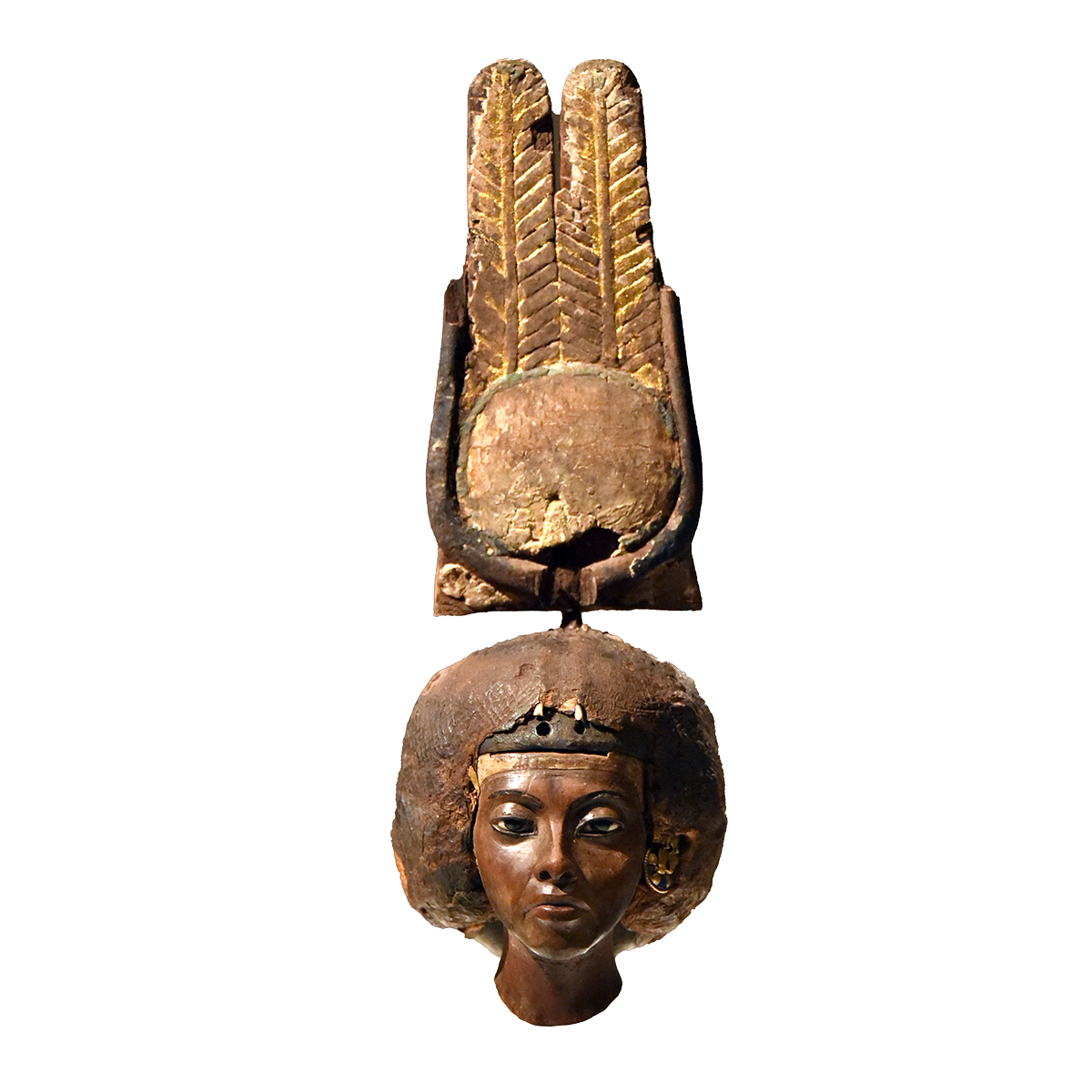
Queen Tiy: Oldest Wooden Bust in Egypt, with a very symbolic hairpiece.
Measuring just 9.4 centimeters in height, the figure nevertheless exudes a remarkable sense of monumentality. Queen Tiy is depicted with refined serenity, and the sculptor created a timeless, almost sacred presence. The choice of yew is significant. It’s a slow-growing, resilient wood associated in ancient Egypt not only with durability and protection but also with the afterlife.
Royal Headdress
What makes this bust truly exceptional is its rich inlay technique. The wood is enhanced with ebony, alabaster, gold, silver, and the deep blue gemstone lapis lazuli. In antiquity this was transported over thousands of kilometers, primarily from what is now Afghanistan. The inclusion of such precious materials underscores Tiy’s status. It demonstrates how wood functioned in Egypt as a carrier of both aesthetic and political power.
Queen Tiy wears a finely crafted royal headdress, characteristic of Egypt’s late 18th Dynasty, the so-called Amarna period. At first glance, it resembles a simple diadem or headband, fitted closely to her hair. From the decorative element attached to her hairstyle, two slender, vertical feathers rise straight up. They create a striking accent on the small bust. Directly beneath these feathers is a round disc, often interpreted as an early symbol of the sun or solar disc. The sun would later play a central role in Egyptian religious practice.
Grand in Symbolism
Queen Tiy was the mother of Akhenaton, the pharaoh renowned for his radical religious reforms. It was he who introduced the sun god Aten as the central deity. Tiy herself played an exceptionally active role at court and enjoyed considerable influence. This bust serves as a visual affirmation of her position: modest in size, yet grand in symbolism.
Despite the vulnerability of wood, the sculpture has survived millennia. The original piece is preserved and displayed at the Neues Museum on Museumsinsel in Berlin, Germany. The renowned art reference work Janson’s History of Art also makes mention of this bust.
Jan Bom, 8 February 2026