Jesus and Mary. In nine saw cuts. That’s all it takes to saw the silhouette of a woman from a yew trunk. Mary. I added a medallion to her ‘pregnant’ belly, in which a smiling face is hidden. That of Jesus.
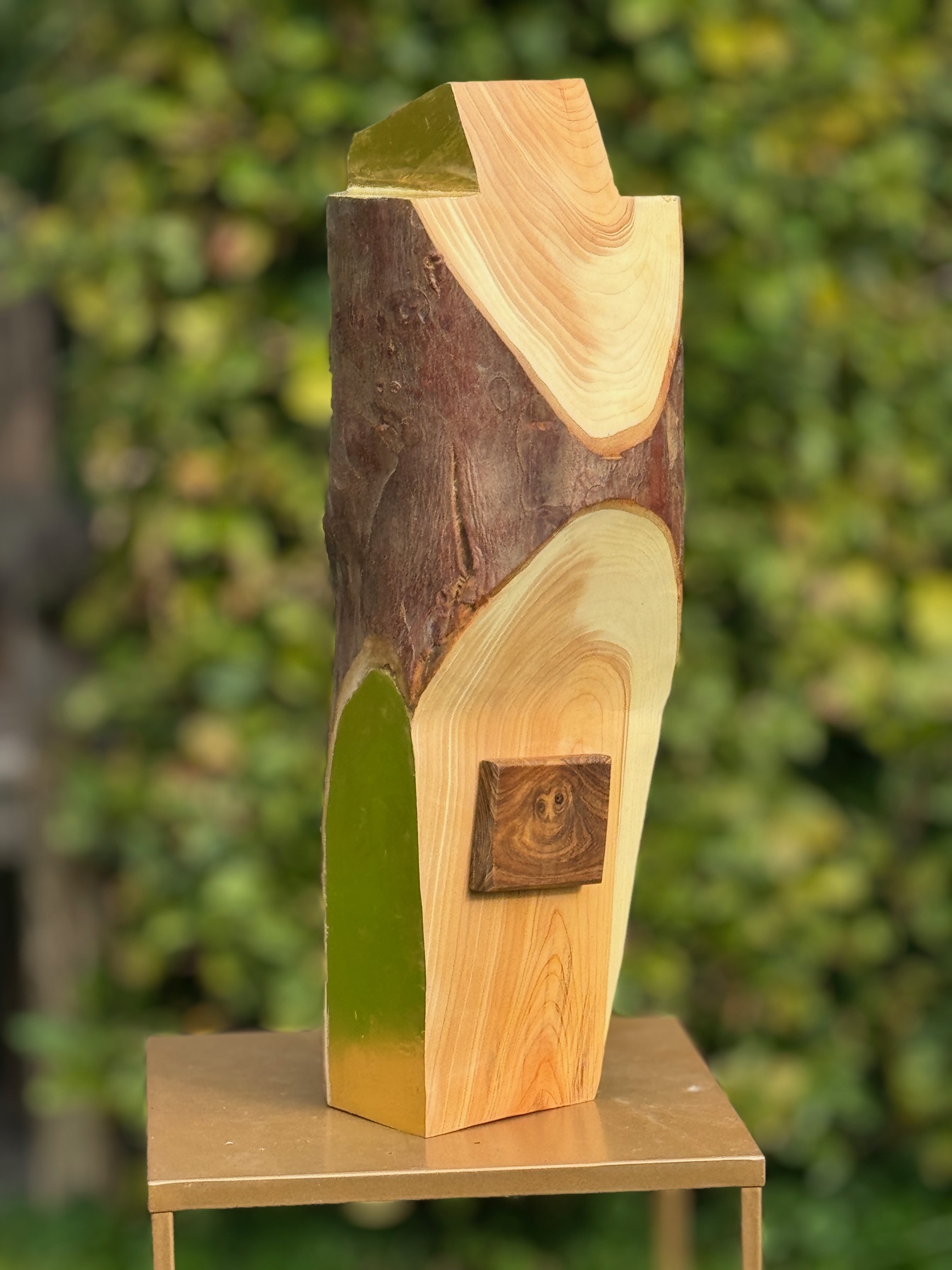
Jesus and Mary. She sawn from a Yew trunk, he from a Laburnum plank.
The basic forms of the sculpture I saw on the auction site ‘Kunstveiling.nl’. It seemed nice to execute the (unsold) brass figurine by Jef Depassé (1943 – 2021) in wood. The design is brilliant in its simplicity. Tender too. As if the intact bark at the front represents two folded hands. Protective. Introverted.
But what a pity that Depassé made a sculpture where ‘the skin’ resembles tree bark, while in reality it is made of dark Alpaca, a kind of imitation silver.
Rock-hard yew
In my wood collection a beautiful yew trunk (Taxus baccata) was waiting for me, in times long past a beloved wood species for wood carvers. Extremely hard, that’s for sure. For the technicians: this Dutch wood is comparable in hardness to that of Merbau, 680 kgf. Lime wood is very soft in comparison: less than 150 kgf.
The genius of the design only became apparent when I drew the lines for the saw cuts on the trunk. Jan van Harskamp from Houterij De Specht was kind enough to turn on his large band saw on my course day. He again delivered perfect sawing work, without ugly notches. That’s not very easy with such a large industrial machine and a round trunk.
The great enjoyment began when sanding the saw cuts smooth. Long live my new Mafell router motor, which also proved to be a quiet powerhouse as a sanding machine. I bought it to help me mill out a Medieval letter panel in the belly of my yew lady. Surrealistic. A collision of times: abstract contemporary art with the Gothic from 1500. Unfortunately that plan proved technically unfeasible due to the curvature in the belly. A letter panel requires a flat surface.
Baby’s head on belly
At night the idea came to make that belly pregnant, by mounting a baby’s head from a different wood species on it. I made a test model from plasticine. Stuck on my lady. It didn’t look right. Far from subtle.
Another night later I remembered a little face that had appeared last summer when sawing a Laburnum plank (Laburnum watereri ‘Vossi’). Could that perhaps represent the baby? The idea of mounting an example of ‘anthropomorphism’ on a sculpture turned out to work much better. (More than ten years ago I made a photo booklet with the poet Leo Mesman about attributing human emotions to trees: Declarations of Love.)
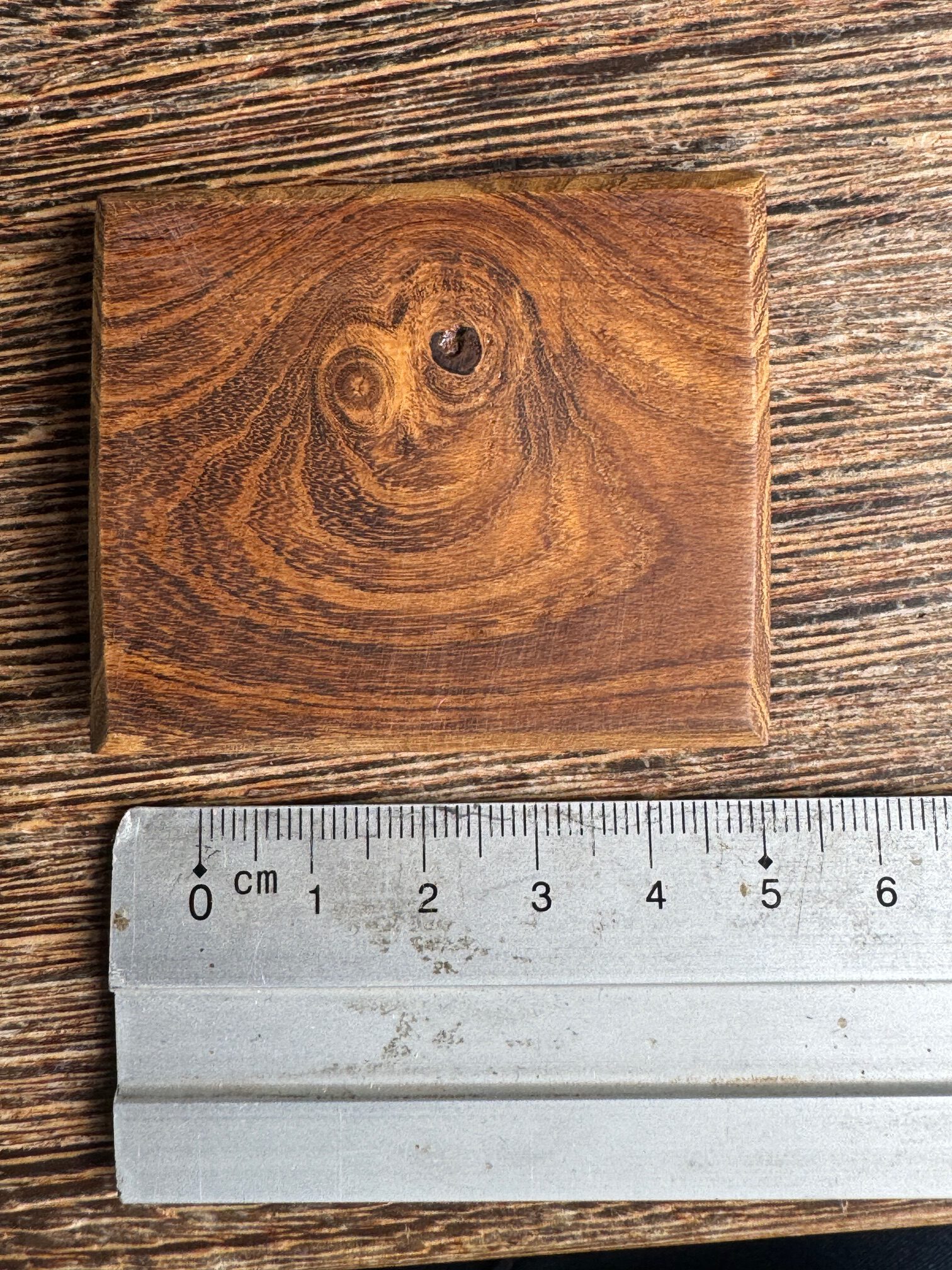
Anthropomorphism is attributing human characteristics to animals, objects and … trees.
Medallion of Laburnum
After placing this square wooden medallion I could further finish the sculpture. I gilded the smoothly sanded sides of the sculpture with 24 carat gold leaf. The head, belly and bark received a treatment with French patinating wax, a wonderfully fragrant polishing wax, neutral in color.
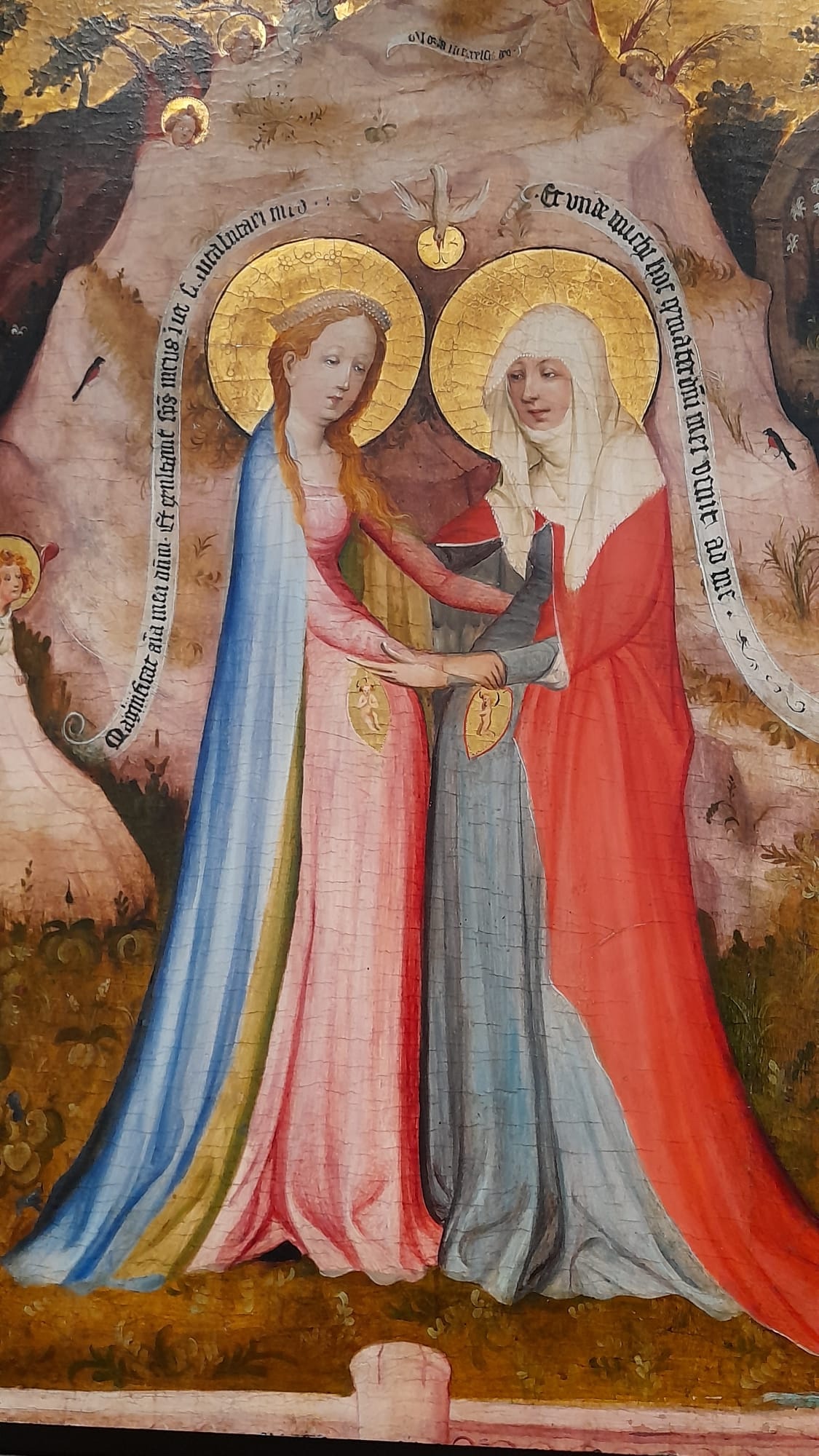
The Visitation of Mary, with a painted Jesus on her pregnant belly.
Now the title. Again in the Middle Ages a painter depicted Jesus by portraying him as a child on Mary’s pregnant belly. On his altarpiece from around the year 1410, ‘the Visitation’ in the Catharijne Convent museum in Utrecht, this can be clearly seen. Mary’s pregnancy is perhaps the most famous pregnancy in Western world history. So that had to become the title of my compilation: Jesus and Mary.
Jan Bom, October 9, 2024
With thanks to Tom Ligthart and Hans van Wijk, who provided me with additional information.