Barbara Hepworth and her spiritual circles will always remain connected. The round holes in her wooden sculptures offer a glimpse into sacred landscapes. Not only on earth but also a view of the sun, the moon and the universe.
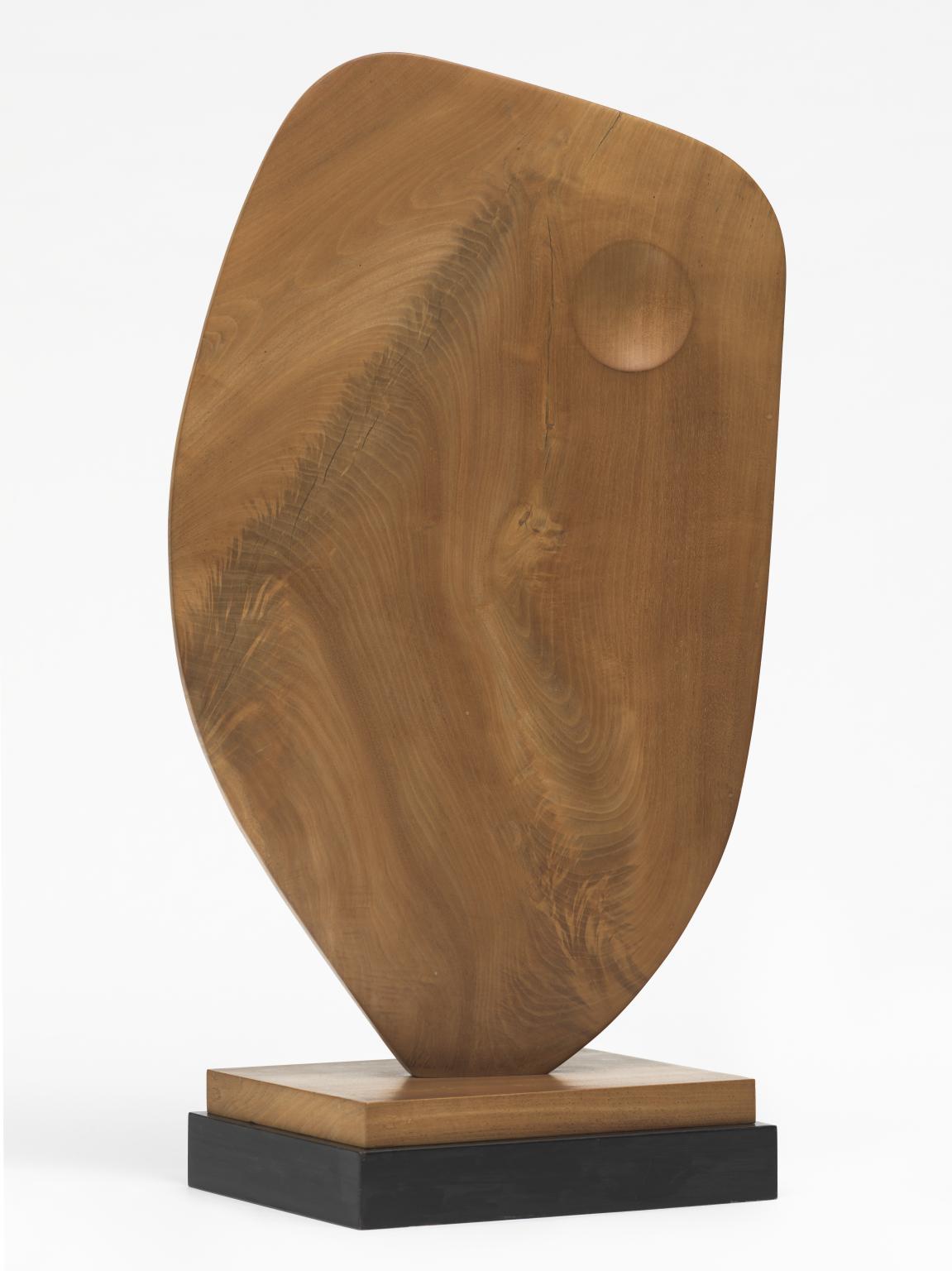
Barbara Hepworth and her spiritual circle, in this sculpture Single Form (September) from 1961 not completely hollowed out.
Barbara Hepworth (1903–1975) is considered one of the most influential sculptors of the twentieth century. Eleanor Clayton’s biography about her, ‘Barbara Hepworth, Art & Life‘, moreover emphasizes her role as an engaged artist who fought for recognition of the female voice in the art world. Hepworth suffered from being labeled ‘the female Henry Moore’, as she was often portrayed in the press.
Hepworth was born in Wakefield, England, and worked for a long time in St Ives, Cornwall. Although she also became famous for her sculptures in stone and bronze, her wooden sculptures are nevertheless the most poetic and spiritual works in her oeuvre. In these sculptures, a quest for natural harmony, inner space and connection with the cosmos unfolds. The works, often hollowed out with round circles, created the style characteristic of a constantly recurring ‘spiritual circle’.
Wood as a living material
For Hepworth, wood was not a neutral carrier for her works, but a living material. She worked with an almost meditative dedication. Different wood types — such as oak, mahogany and guarea — offered their own resistance, scent and grain, and thus co-determined the end result. Her fascination with the natural form of wood led to sculptures that seemed more discovered than made.
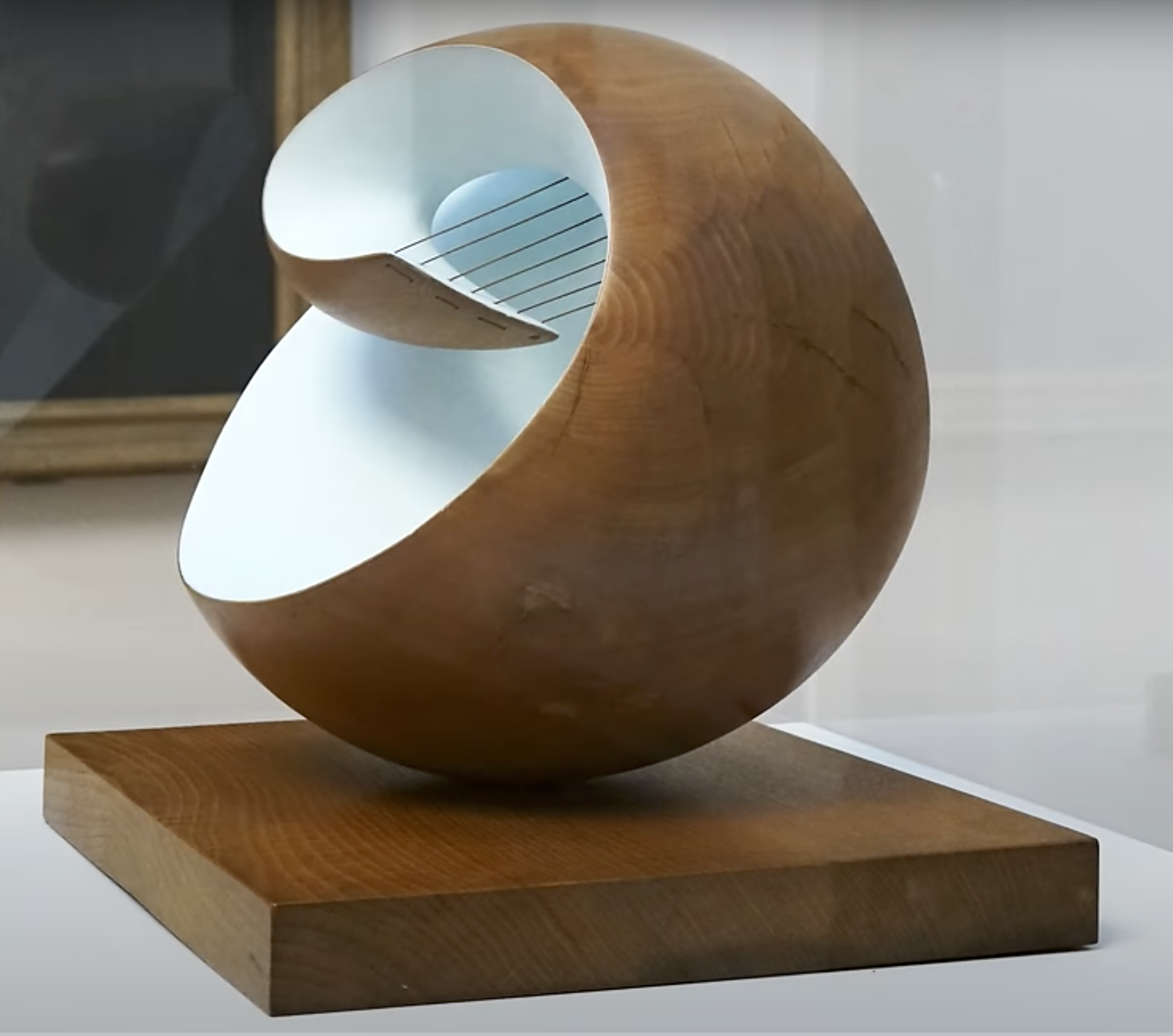
Pelagos, a sculpture from 1946 is like a connection between two waves, with the curves of a shell.
In the years 1943–1950 a series of wooden sculptures emerged that are often seen as the spiritual heart of her work. Sculptures such as Pelagos (1946), Hollow Form with White Interior (1963), and Corinthos (1954) show how she created intimate forms with wood: oval or circular objects, sometimes pierced with circular shapes, often also with taut strings. These forms evoke associations with sea urchins, seeds, shells or sound boxes — organic, closed and yet open. They seem to breathe and are simultaneously also like rocks in a natural landscape.
Inner space and harmony
One of Hepworth’s most important contributions to modern sculpture is her use of ‘inner space’. She was one of the first to employ the piercing of sculpture as a full-fledged visual element. That void became with her not an absence, but a place of concentration, of contemplation, of light and dark. Especially in wood, where the surface looks warm and alive, this space acquires something sacred.
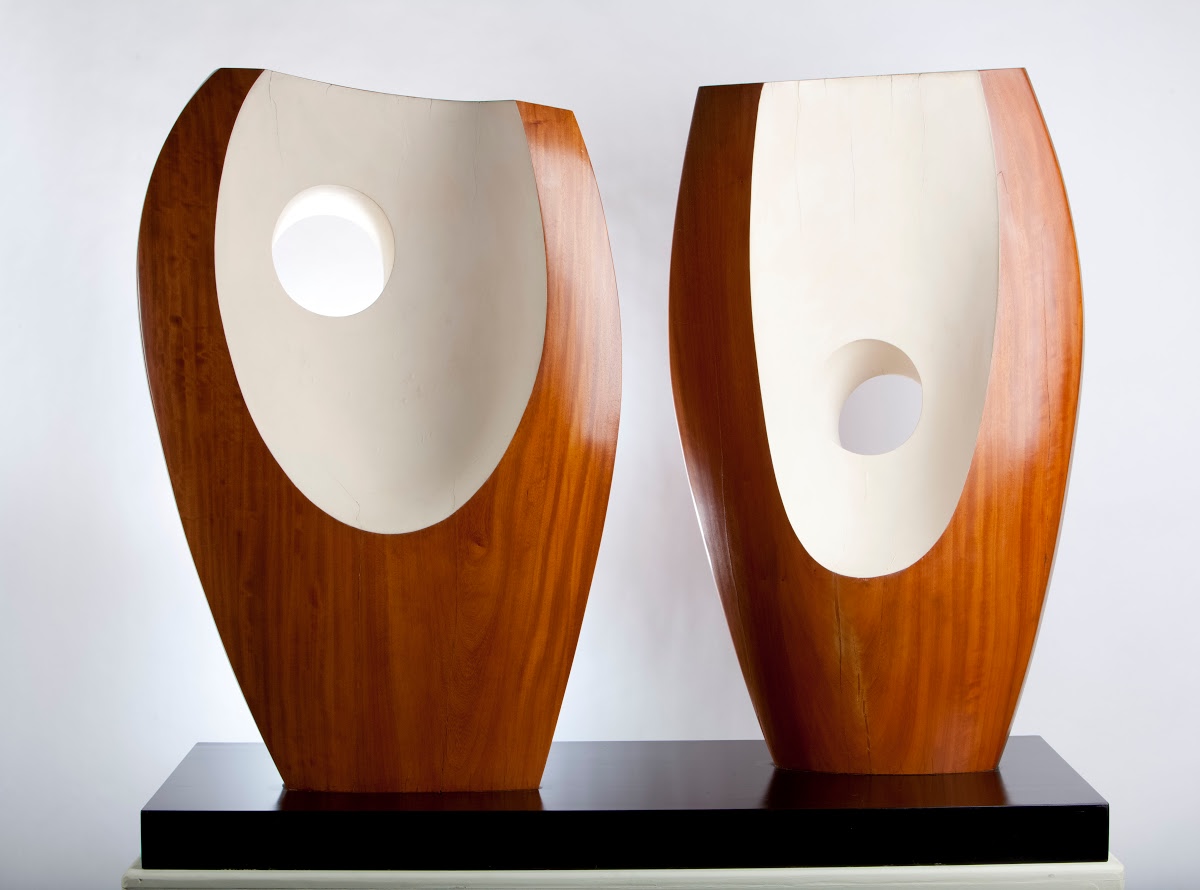
Two Forms with White (Greek), from 1963, carved from Guarea wood.
This attention to harmony is partly rooted in her personal life. During World War II, Hepworth moved with her family to St Ives in Cornwall. There she found not only peace, but also a community of like-minded artists and thinkers. A circle of artists emerged who wanted to unite geometry, spirituality and nature in a new language of forms. She also found a studio and a garden there where she could work on her large sculptures.
Hepworth’s spiritual circle
The term ‘spiritual circle’ thus refers on the one hand to the circle of artists around her, on the other hand to the circle as a recurring motif in her work. For Hepworth, the circle stood for completeness, connection and eternity. In her wooden sculptures, this form returns again and again, sometimes as an open ring, sometimes as a closed oval or spiral-shaped cavity.
Within this circle, her interest in Eastern philosophies and mysticism also plays a role. Hepworth read about Buddhism and Zen, and became inspired by the way these traditions viewed form, emptiness and silence as equal forces. Her sculptures invite a quiet dialogue — no dramatic gesture, but an inner resonance.
Hepworth died in 1975 in her studio in St Ives, which nowadays serves as a museum, as part of Tate Modern. Her studio gives the impression as if the artist could step in at any moment to work. The chisels are ready, some sculptures are half finished. Amidst this collection of sculptures — in stone, bronze, and wood — her voice remains audible: a soft, geometric meditation on what it means to be human in a living world. Her spiritual circle is still open.
The competition with Henry Moore
Biographer Eleanor Clayton gives little attention in her 2021 book to the ‘competition’ between Hepworth and artist Henry Moore, who also carved splendid sculptures from (wet) elm wood. Clayton (and with her other recent researchers) puts a more critical and feminist perspective against this: not so much competition, as inequality in recognition. Yet the comparison with Moore is historically unavoidable, and in some respects also illuminating.
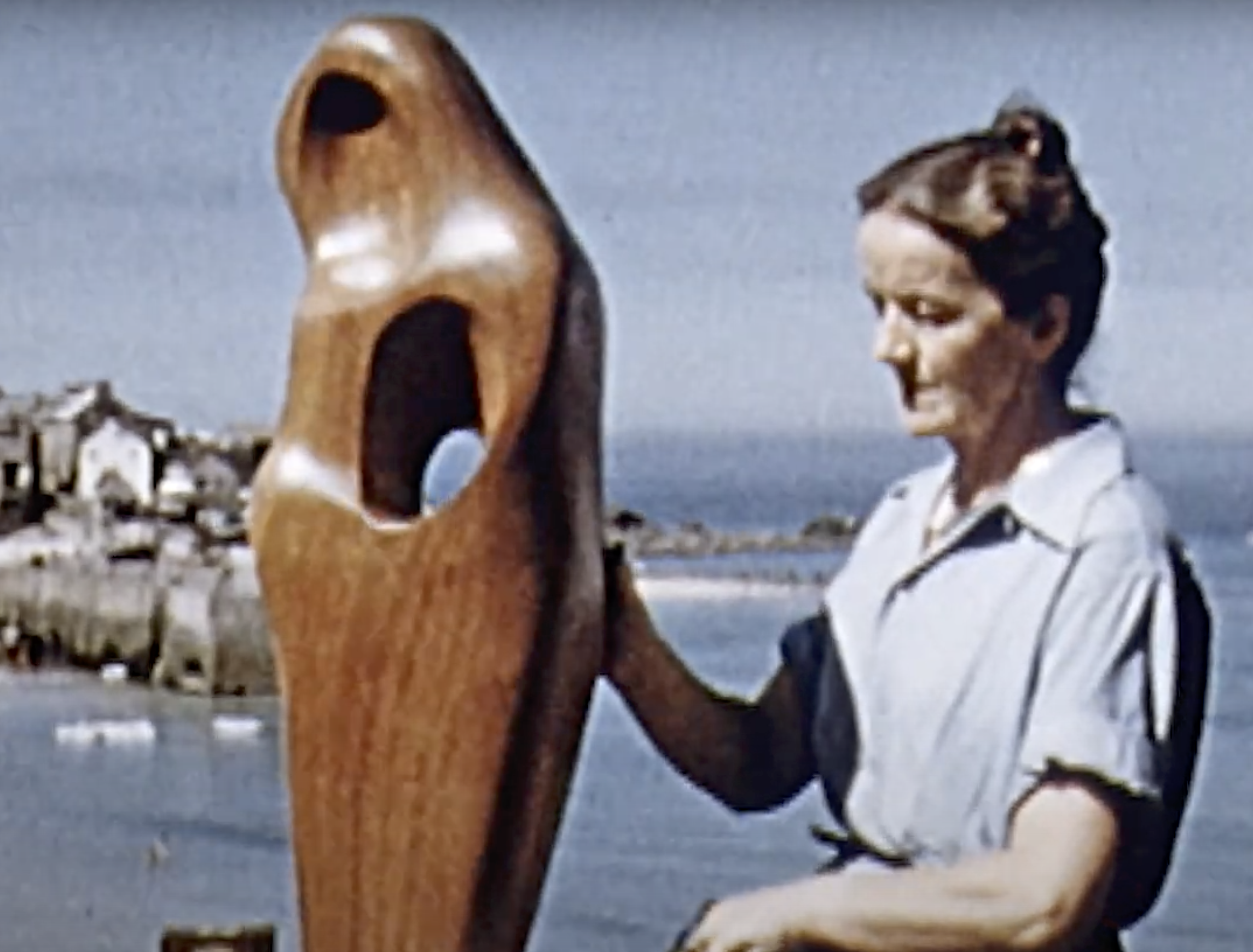
Barbara Hepworth and her spiritual circles on the coast of Cornwall, an important source of inspiration.
Hepworth and Moore knew each other early on; they both studied at the Leeds School of Art and later at the Royal College of Art in London, in the early twenties. They were pioneers in England of the so-called ‘direct carving’ movement: working stone or wood directly, without a prior model or clay study. Both artists used organic forms, sometimes inspired by stones they found on the beach. Both also experimented with open spaces in sculpture. Yet Moore was early on positioned as the great innovator of British sculpture, while Hepworth remained in his shadow for a long time in terms of attention.
Part of that inequality lies in the network of institutions and critics who more actively supported Moore. In the forties and fifties he received larger commissions, more institutional support and greater visibility in international exhibitions. His work was linked to a ‘universal’ modernist language — which often also meant: masculine, rational and monumental. Hepworth’s work, on the other hand, was, especially in her early period, regularly labeled as ‘lyrical’ or ‘feminine’ — terms that trivialized her importance in the eyes of some critics.
Even in the American art bible Janson’s there is a terrible error with a photo of her ‘Sculpture with Colour (Deep Blue and Red) from 1940. According to the authors, this sculpture is made of wood. However, Hepworth worked mainly with plaster during the war years. Tate Modern and also biographer Eleanor Clayton are very clear about that. I corrected this blunder in Janson’s earlier as well.
Hepworth was aware of the inequality
Hepworth was painfully aware of this unequal appreciation. She worked in a time when female artists were often considered exceptions. Despite her international success (she represented Great Britain at the Venice Biennale in 1950 and had exhibitions around the world), she did not always receive the institutional recognition in her home country that Moore did.
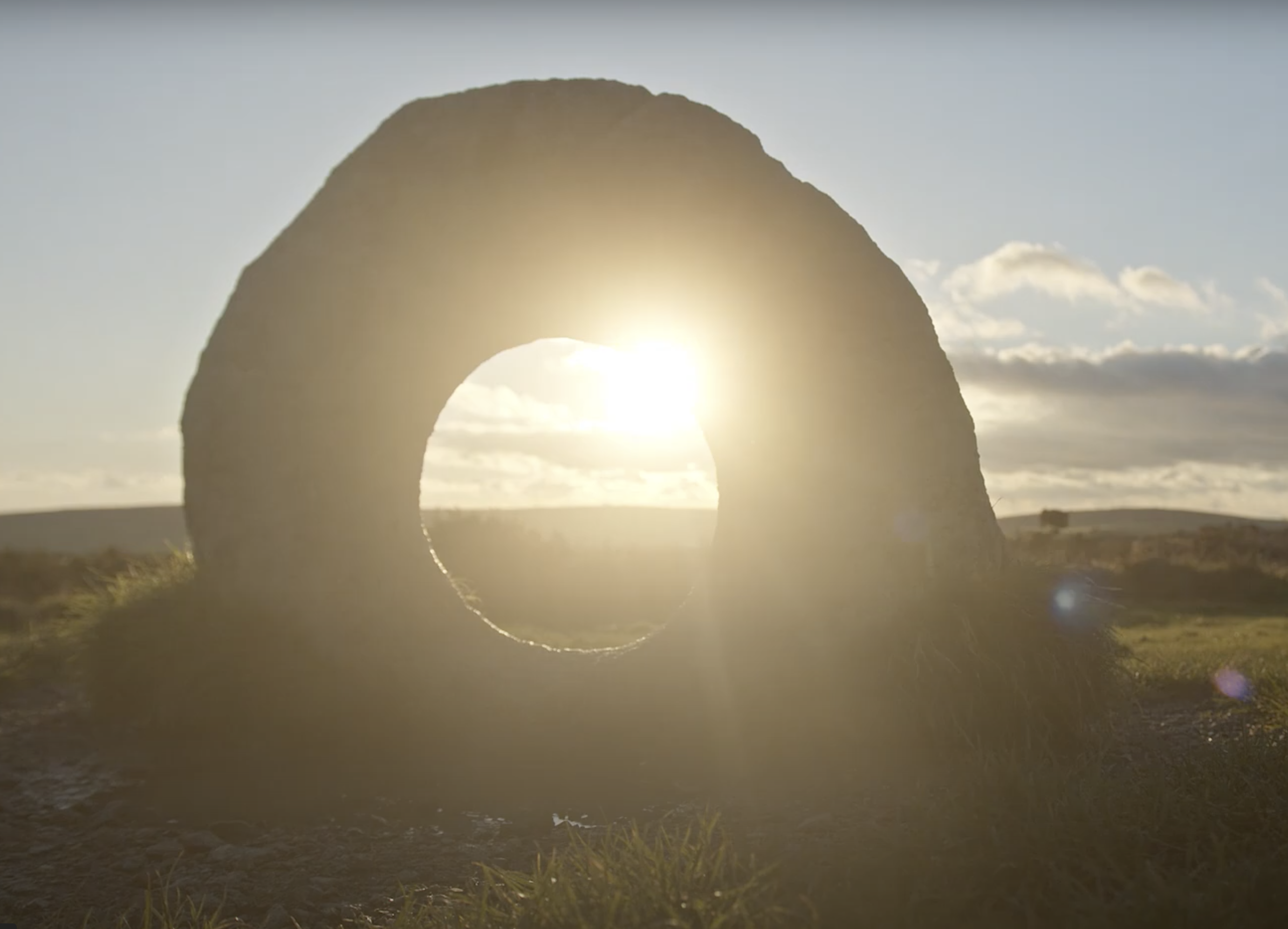
Inspiration from the surroundings of Cornwall: prehistoric sculptures in the landscape.
In the sculptures themselves clear differences are also visible. Where Moore’s sculptures are often robust, earthy and heavy — think of his famous ‘Reclining Figures‘ — Hepworth seeks lightness, balance and harmony. Her use of wood reinforces that even more: it is warm, human, inviting. Where Moore’s figures are sometimes overwhelming in their massiveness, Hepworth’s forms are more invitations to reflection. She thus connects to a different tradition of modernism: not the heroic, but the relational, the connecting.
Contemporary reappraisal
In recent years there has been a reappraisal of Hepworth’s role, partly thanks to biographies such as Clayton’s. Feminist art history has put her contribution in the light again, separate from Moore’s shadow. Hepworth is now more recognized as an independent pioneer, who consciously chose her own path — not despite her being a woman, but partly thanks to her experience as a mother, partner, working woman and politically engaged artist.
Jan Bom, June 22, 2025