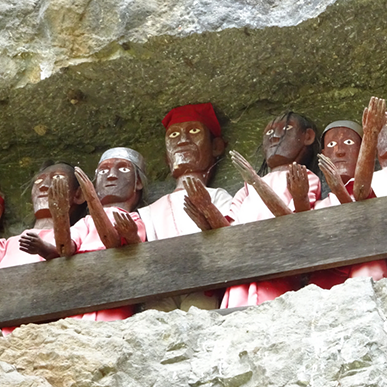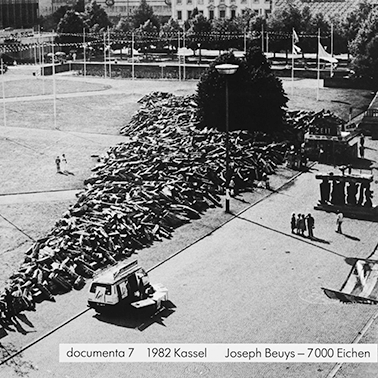
The wooden idols from the Bible are nowhere near as well known as The Golden Calf. Yet in the Book of Jeremiah they once again aroused the wrath of God. So it stands in the book of Jeremiah, which is much more recent than Exodus. In that, the Golden Calf played an important role.
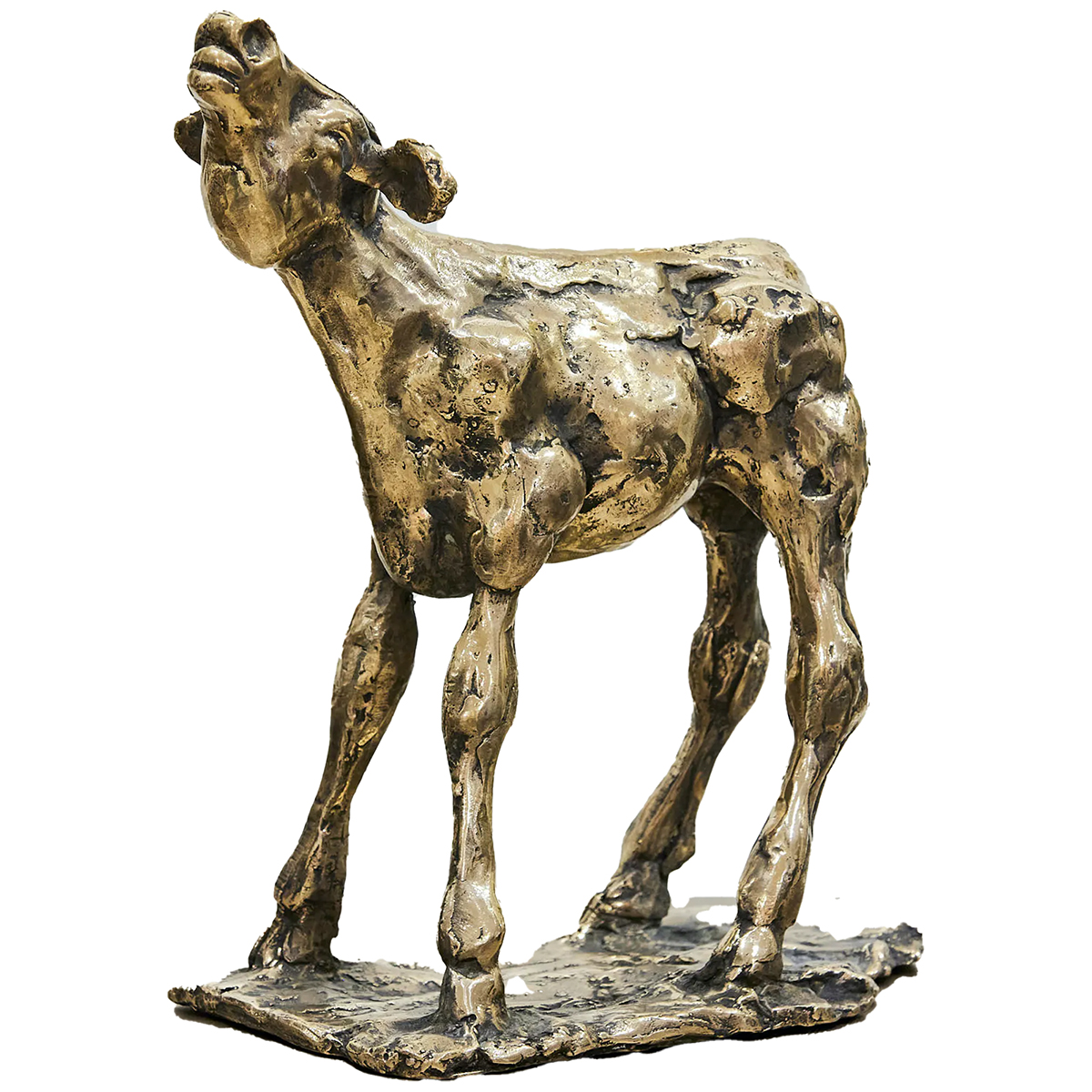
The Golden Calf of the Film Festival in Utrecht
We read Jeremiah 10 verses 3 through 5, based on a modern Bible translation.
“3 For the customs of the peoples are worthless; a piece of wood is cut from the forest, worked by a craftsman with an axe,
4 decorated with silver and gold, and fastened with hammer and nails so it will not fall over.
5 They are like a scarecrow in a cucumber field: they cannot speak, they must be carried, because they cannot walk. Do not fear them, for they can do no harm. And neither can they do any good.”
‘Learn not the way of the heathen’
It is in the still beautiful King James style translation in which the Old Testament God of vengeance hermetically states what he thinks of these idols.
“2 Thus saith the LORD, Learn not the way of the heathen, and be not dismayed at the signs of heaven; for the heathen are dismayed at them.“
In other words: Do not imitate other peoples and do not be frightened by signs in the sky, even though those other unbelievers are afraid of them. The warning has to do with the belief in nature gods. The first farmers were also very dependent on the weather. A radio or website that gave weather forecasts did not yet exist, of course.
I find it very unfortunate that these historical wooden sculptures have not been preserved. They would now have been special museum pieces with a story. One can only guess at their form. They must have looked robust and impressive, also because of the golden decorations. Possibly they were human or animal figures. We will never know for sure.
While Moses sat on the mountain
What is certain is that idolatry was not easy to suppress. The prophet Jeremiah lived around the 7th-6th century before Christ. That was long after the journey through the desert that Moses undertook, a journey with so much despair that the Israelites lost faith in that one God. They reverted to a ‘fertility symbol’ of animists, peoples with the belief that trees, rivers, mountains, and other natural elements are animated with spirits or souls.
That Golden Calf can be found in the older Book of Exodus 32 in which Moses plays the main role. It is a tradition for which no historical evidence exists, but the story is beautiful. While Moses on Mount Sinai carved the Ten Commandments into a flat stone, the Israelites under the leadership of Aaron made a golden calf and worshipped it. When God saw this and sent Moses back down, he became furious. He broke the ‘stone tablets with the commandments’ and also destroyed the Golden Calf. He then punished those who were involved in this ‘idolatry’.
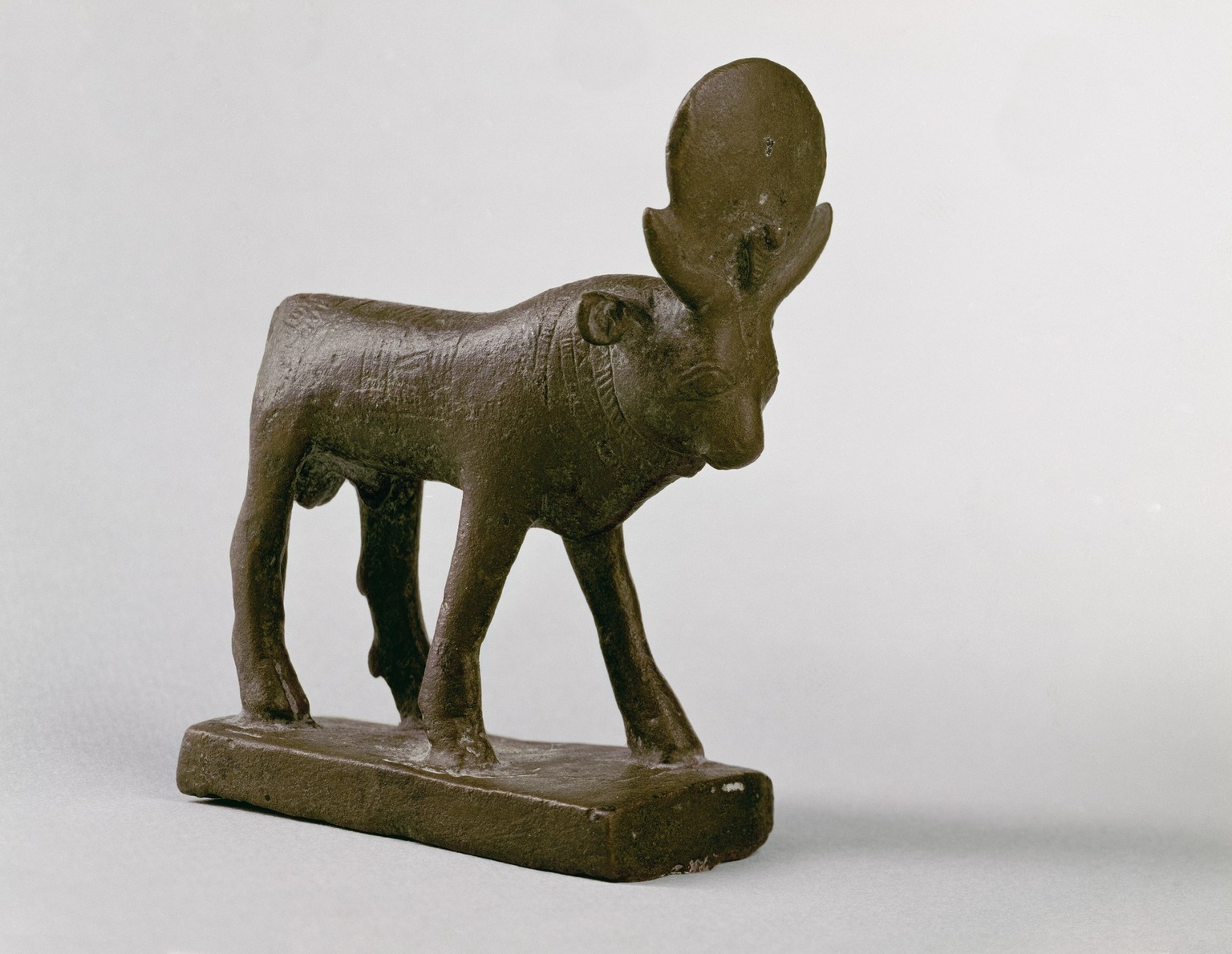
The Egyptian bull god Apis, worshipped in Memphis.
What this Golden Calf must have looked like approximately can be guessed. The Israelites had lived in Egypt for many generations, where in Memphis the god Apis, a sacred bull, was worshipped. The Golden Calf could have been stylistically influenced by Egyptian art, possibly with a robust, powerful appearance and a stylized form typical of Egyptian depictions of sacred animals.
In Canaan, the promised land, bulls and calves were also symbols of power and fertility. They were often associated with Baal, one of the most important gods of the region: again a symbol of fertility.
Thrown out the car window
Anyway, the Golden Calf must have been a substantial sculpture, assembled from the melted golden jewelry of the desert travelers, during a journey that would have lasted many decades.
For the annual Film Festival in Utrecht, sculptor Theo Mackaay (1950) made a new calf, which is awarded to the prize winners. Sometimes such a sculpture is auctioned. It then fetches amounts like 1,600 euros. But even in these times, the statuette is not appreciated by everyone. Prize-winning actor Rijk de Gooijer threw his winning Golden Calf out of the rolled-down window of his car onto the highway. That action was even captured on film and can still be seen on YouTube.
Jan Bom