Ellsworth Kelly created spiritual totem poles. Not like the First Nations of the American west coast with bird figures, but completely abstract in form. With a slight curve he gave the wood some movement, giving the artwork something natural.
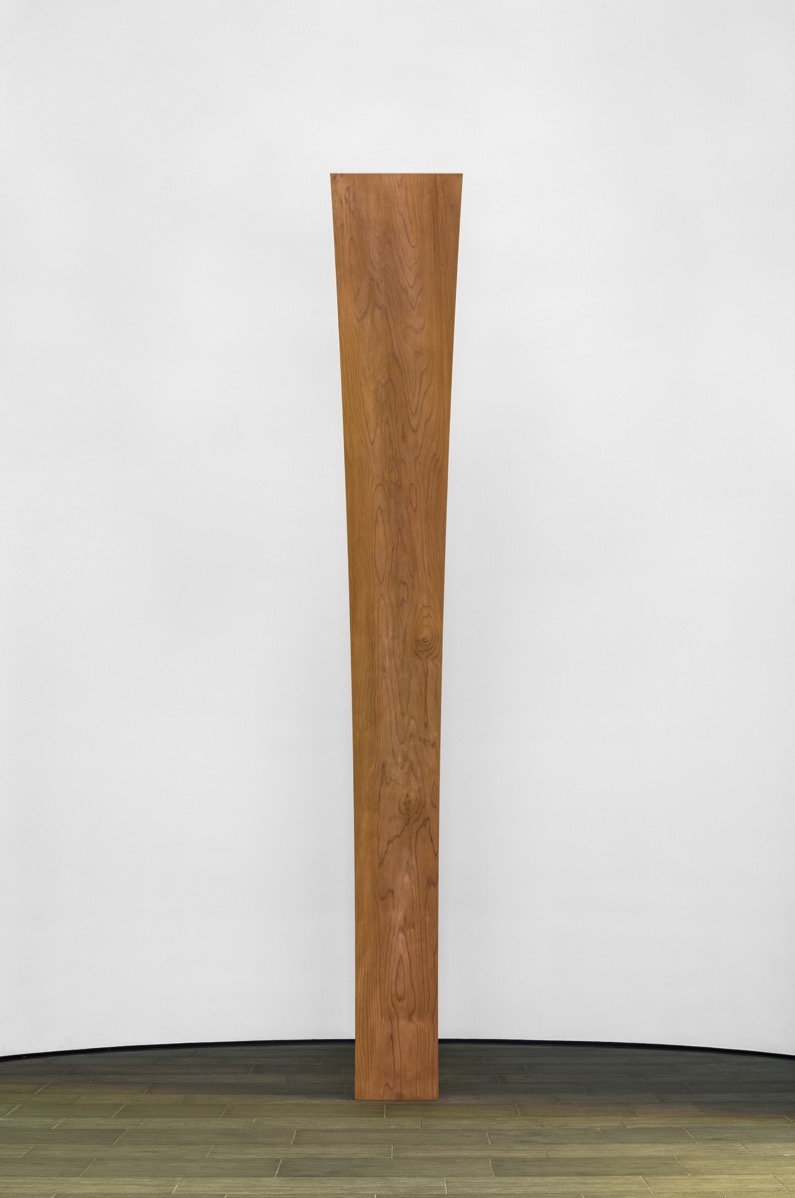
This wooden ‘totem pole’ ‘Untitled’ by Kelly is no less than 5.49 meters high.
In the oeuvre of this famous American artist (1923 – 2015) the number of artworks in wood is limited. He made no more than 30, spread over a long period between 1958 and 1996. All these works he called ‘totems’, the Indian sign that someone inherited from their own family. This can be a plant, an object or an animal. The tall standing wooden sculpture that Kelly made in 1968 most closely resembles a real totem pole, but remained unnamed: ‘Untitled’.
I saw this enormous sculpture of 5.49 meters (216 inches) in the Rijksmuseum in Amsterdam, at the retrospective exhibition of Kelly, in October 2021. Even though I wasn’t working with wood myself at the time, this fascinating work kept me standing for a long time. That certainly didn’t apply to all his other art forms such as the stainless steel panels or his bright color studies.
Subtlety of a hundred years
Wood fascinates. The artist himself thought so too. Once asked why the medium of wood attracted him, he answered: “The eye takes it in in a second. But the drawing in the wood has taken a hundred years or more to become that way. Everything that takes that long to grow offers us possibilities.”
Ellsworth therefore left his wooden sculptures as natural as possible, without detailed interventions with gouge, burin or other tools. Nothing could surpass the natural state of the wood itself, was his conviction. Nothing could improve the subtlety of an irregular wood grain.
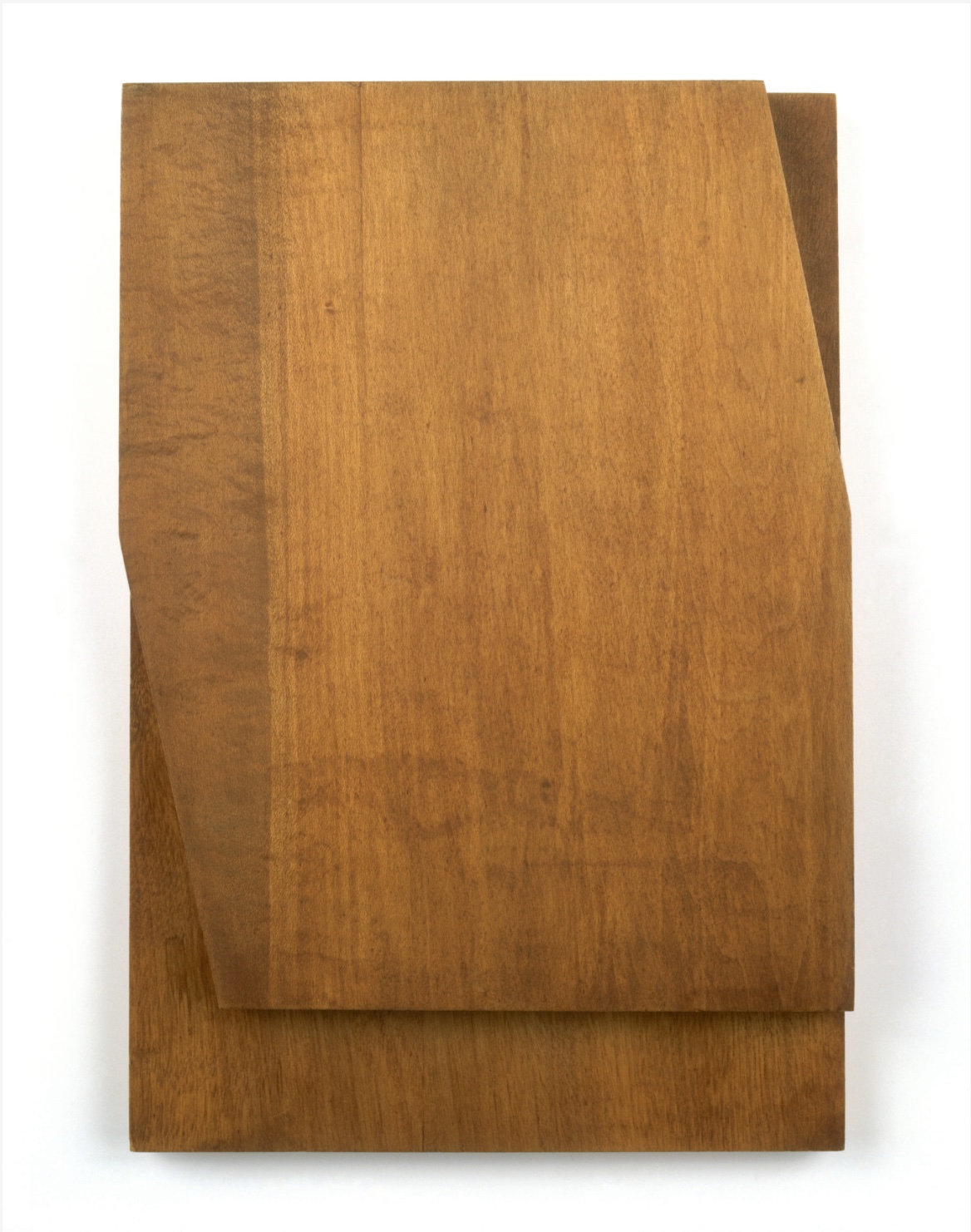
All his works in wood were once collected and exhibited in Boston in 2012, accompanied by a catalog. Ellsworth was very pleased with this exhibition. The Museum of Fine Arts brought him back to his years at the art academy, which is connected to this museum. In a radiant mood he made jokes about the enormous uniform wooden surfaces of his works. “I don’t glue veneer over the wood because I don’t want to make furniture pieces from them”, he said.
Chinese landscape paintings
Ellsworth had no preference for a particular wood species. He worked in birch, elm, mahogany, maple, red and white oak, padauk, redwood, sapele, maple, sycamore, teak, walnut, wengé and zebrano. The drawing in the wood was for him the starting point for the final form of his work. About the sculpture in sapele he said: “This always reminds me of Chinese landscape paintings.”
No matter how cold and hard his metal sculptures were, no matter how bright the colors of his painted works, according to Ellsworth nature was always his source of inspiration, even his ‘touchstone’. Natural forms therefore appear implicitly in his totems. He loved the French word ‘Concorde’ (harmony, unity, peace) which he had picked up in his young years in Paris. In the French context the word is often associated with cooperation and peace between people or countries. Kelly belonged to the Allied liberators who landed on the coast of Normandy. His specialty: designing camouflage clothing.
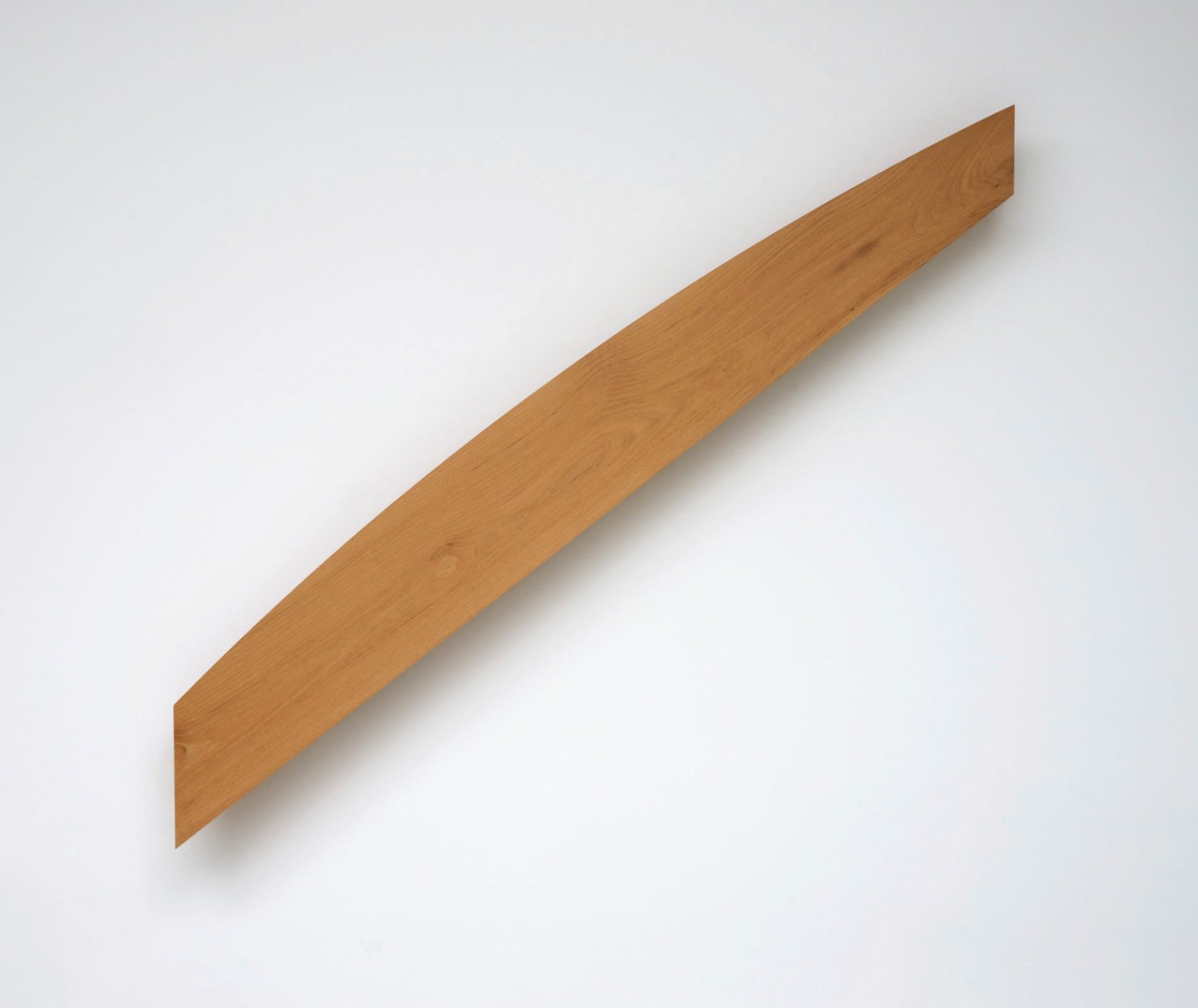
The title of this work by Ellsworth from 1984: Diagonal with Curve XV
Curator Brenda Richardson of the Boston exhibition noted: ‘Ellsworth Kelly knows that life and art are both fundamentally spiritual experiences. His totems testify to this conviction’.
Jan Bom, October 10, 2024