The German sculptor Ewald Mataré has gone down in art history as the maker of the forbidden cat. The extreme-right Nazis of Adolf Hitler labeled the abstract wooden sculpture as ‘Degenerate Art’. Mataré made his ‘Schlafende Katze’ in 1929. Eight years later the sculpture was banned.
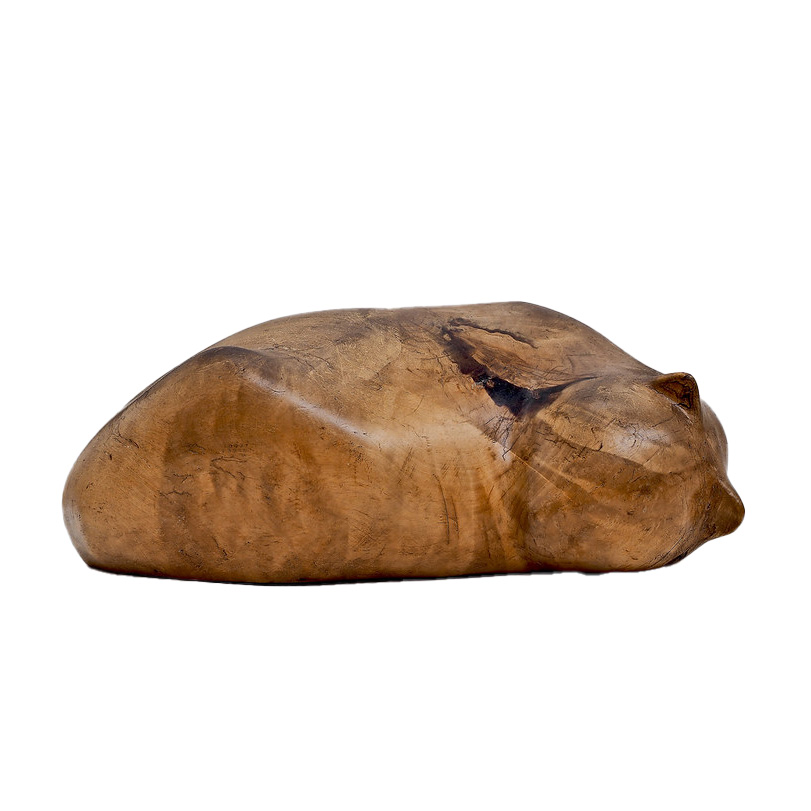
Ewald Mataré and his forbidden cat, sleeping so innocently.
In 1937 the National Socialists labeled the strongly stylized cat at a ‘defamation exhibition’ in Munich as reprehensible and ‘degenerate’. It was too abstract, too expressionistic. Ewald Mataré also lost his job as ‘art professor’ at the art academy in Düsseldorf.
But history corrected this madness of the extreme right. Today his work is recorded as a cornerstone of ‘classic modernism’.
Degenerate art
Ewald Mataré (1887 – 1965) was born as Ewald Wilhelm Hubert Mataré in Burtscheid, now a district of Aachen. He attended the Prussian Art Academy in Berlin, where he eventually chose to become a sculptor. In 1932 he himself became ‘professor’ in Düsseldorf. After Hitler’s seizure of power a year later, his abstract art was labeled as ‘Entartet’, or ‘degenerate’. Even an innocently sleeping cat, comfortably curled up.
Hitler believed: ‘Works of art that cannot be understood in themselves, but need a pretentious instruction booklet to justify their existence, will never again find their way to the German people’.
With another sculpture by Mataré the Nazis dealt even more roughly. They smashed his basalt monument for fallen soldiers from World War I ‘Tote Krieger’ to pieces. The remains were buried in the ground. By chance these were discovered during excavations in 1977, after which the sculpture was restored. The soldier now lies complete again in Kleve, as a timeless indictment against all war violence.
‘Inner stillness’
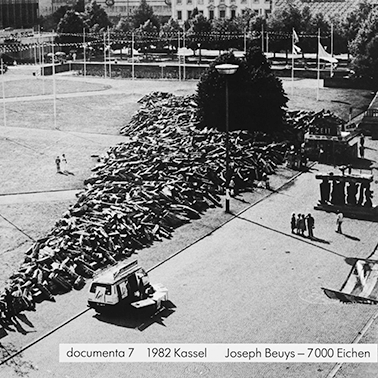
Only after World War II did Mataré get his position as art professor back. He then made his most famous work, the southern door of the Cologne Cathedral. He also participated in the very first editions of Documenta in Kassel. He also trained the later famous artist Joseph Beuys.
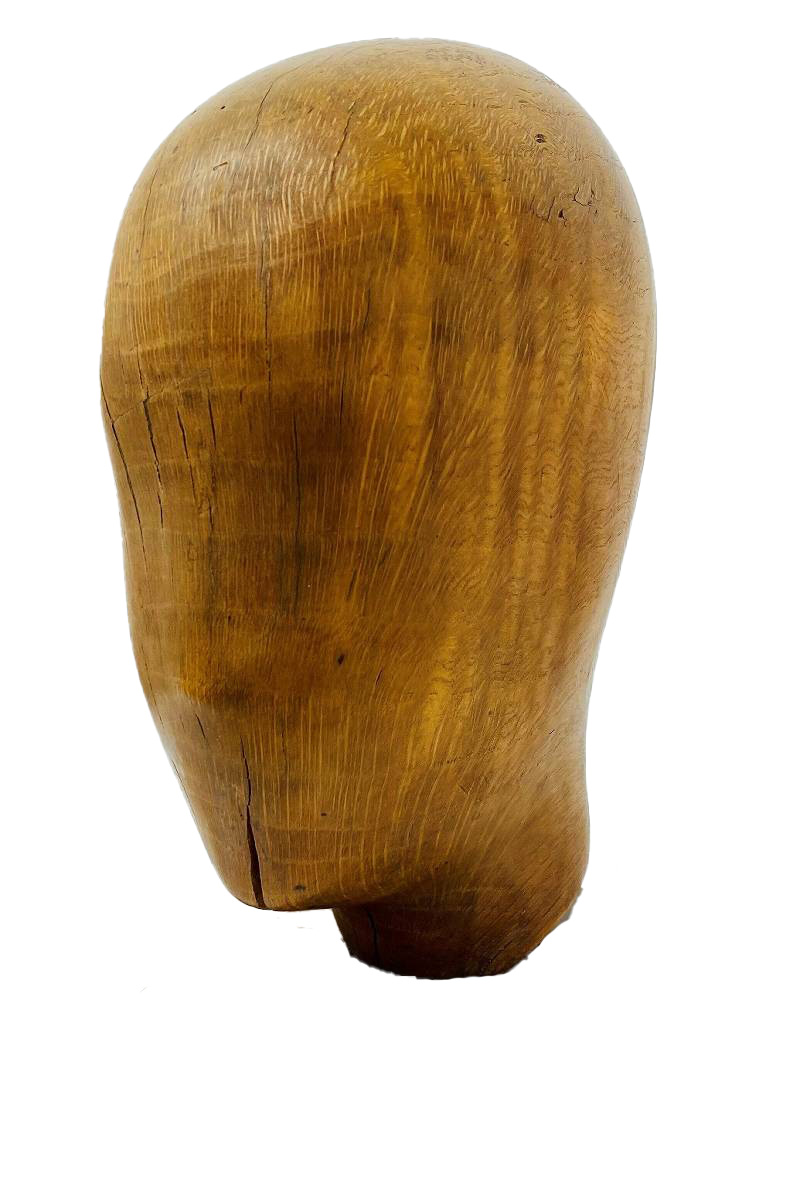
‘Weiblicher Kopf’, or ‘Female Head’ by Mataré.
Mataré’s work is appreciated today for the ‘inner stillness’ it radiates. This certainly applies to the wooden ‘Female Head’ that he sanded from a trunk in 1926. It is my favorite sculpture by him. There is still something of a nose to be seen, something of a chin and neck, but the abstract form could have been worn out by the elements of nature: wind, rain, tides. In the Seychelles I saw such forms on the beach. Millions of years of erosion made the granite as rolling as the hills of Tuscany rounded by agriculture.
Between abstract and figurative
The Museum Kurhaus Kleve managed to buy the sculpture at the end of 2021, as a ‘key work’ for their collection of works by Mataré. This sculpture in particular illustrates how the artist achieves maximum expression with a minimum of interventions in a block of wood. The sculpture is not completely abstract, but also not clearly figurative. This boundary exploration makes the ‘Female Head’ even more exciting than the sleeping cat. You can very easily imagine the pet lying comfortably purring in front of the fireplace.
The sculpture of the head was taken from the trunk of reddish pear wood. Mataré used the grain of the trunk, which runs from top to bottom, to visually enhance the shape of the portrait head. Individual tension cracks have appeared on the surface, typical for wooden sculptures, which deepen this impression further. It almost seems as if Mataré planned the aging processes to give the sculpture the possibility of change.
Jan Bom