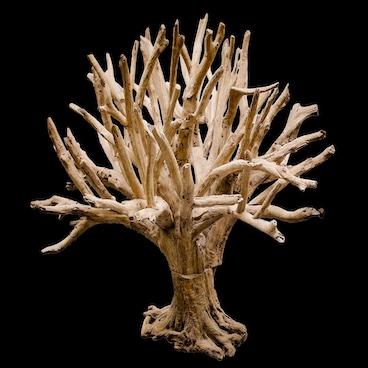
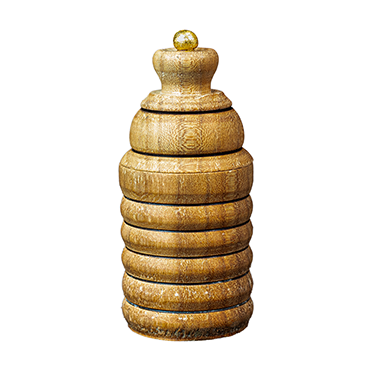
Breaking Through is about pushing boundaries. Its inspiration is the famous Flammarion engraving from 1888. It depicts a medieval traveller discovering the point where heaven and earth meet: a universe still unknown to mankind. In my sculpture, this has become the discovery of the story hidden in the wood: Dendroism.
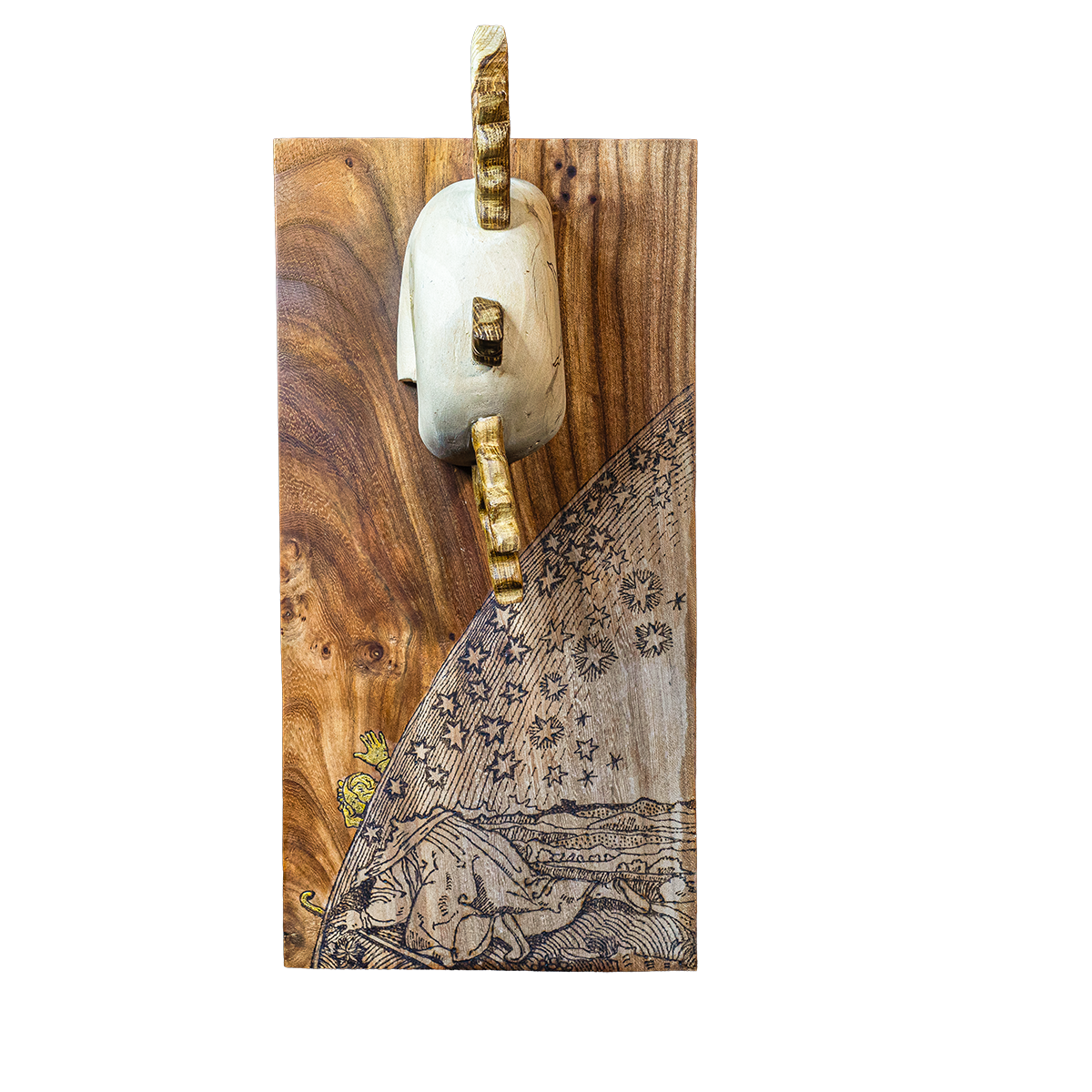
Breaking Through is about discovering the story hidden in the wood.
The image known as Flammarion appeared in 1888 in L’Atmosphère: Météorologie Populaire, a book by the French astronomer and writer Camille Flammarion (1842–1925). It is possible that Flammarion himself made the engraving.
Flammarion had trained as an engraver and lived through a period of enormous industrial and technological change. Railways emerged, along with steamships, telegraphy and electricity. During the Second Industrial Revolution, science opened up unprecedented possibilities.
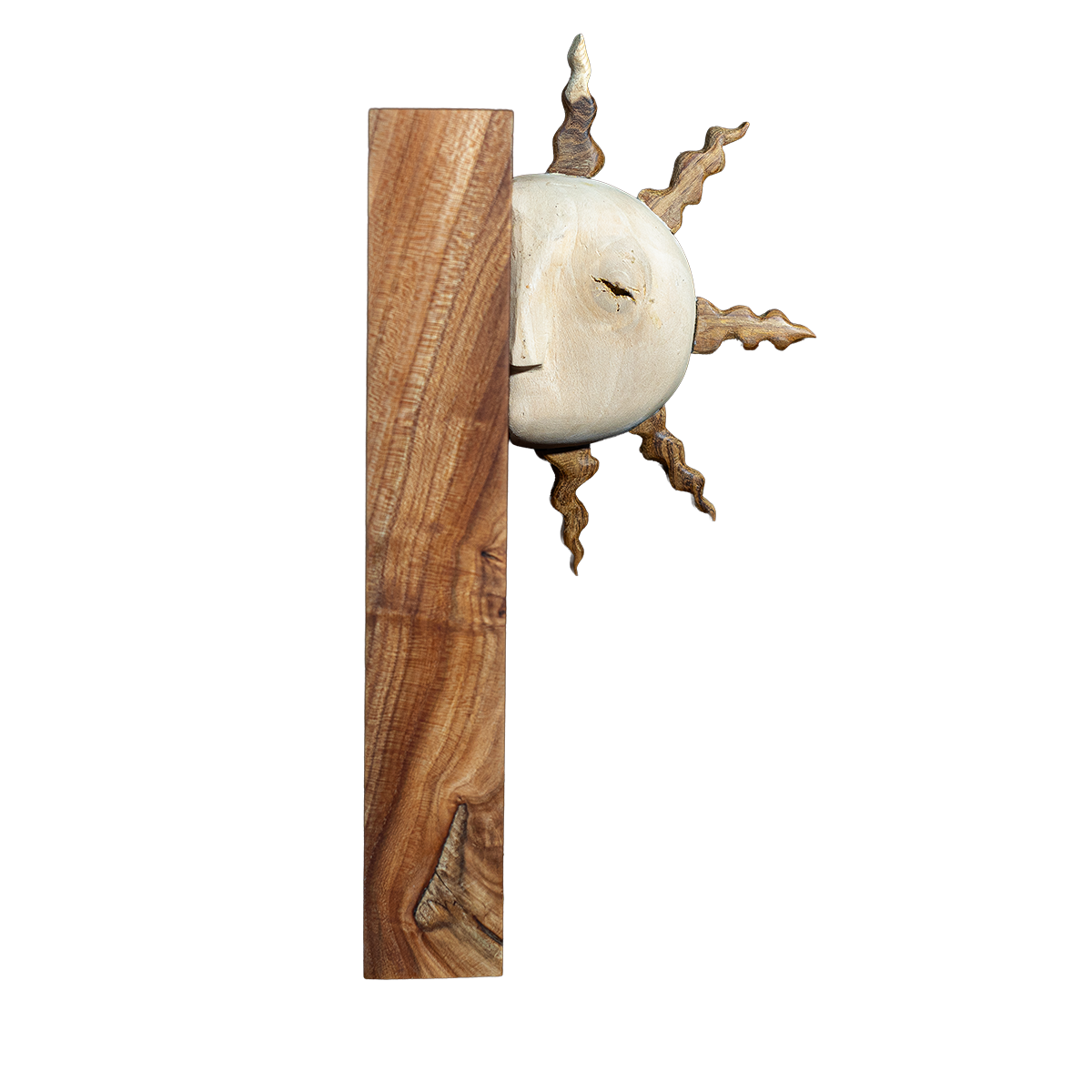
Breaking Through, seen from the side, with the eye and nose of the moon.
The image grew into an icon of human curiosity. It symbolises the desire to push boundaries, explore the unknown and look beyond what our senses tell us.
Perhaps that is also why this image, more than a century later, continues to capture our imagination. Where does the world we know end, and the reality we have yet to discover begin? Even today, with the arrival of AI, we cannot foresee all its consequences.
Breaking Through – on stationery
For many years, the engraving featured as a logo on my wife’s stationery. She often had to explain what it meant to her. But everyone immediately liked the image.
I thought of it again when I started carving a mask in limewood. Halfway through, I came across a dark knot in the wood, right where the mouth was supposed to be. I kept carving deeper and deeper to remove it, until I had gone too far. It was no longer possible to make the mask as planned. At that moment, a sad eye seemed to look out at me from the wood: the last remaining trace of the knot. I stopped just in time. What could I still make from this piece of wood?
The Man in the Moon
Once I had added a nose, it first became The Man in the Moon, a character from an old children’s story. Then I remembered the stationery I had designed for my wife and the cheerful sun in Flammarion’s engraving came back to mind. Why not put the sun on the reverse side, behind the moon?
Using my pyrography pen, I burned the original sun from the Flammarion engraving into the back of the moon. I also cut the sun’s rays from a beautifully figured piece of golden rain wood. I finished the wood with two different oils. An invisible oil over the drawing, and cold-pressed, uncoloured linseed oil from Chelsea Classical Studio, intended for mixing artists’ oil paints.
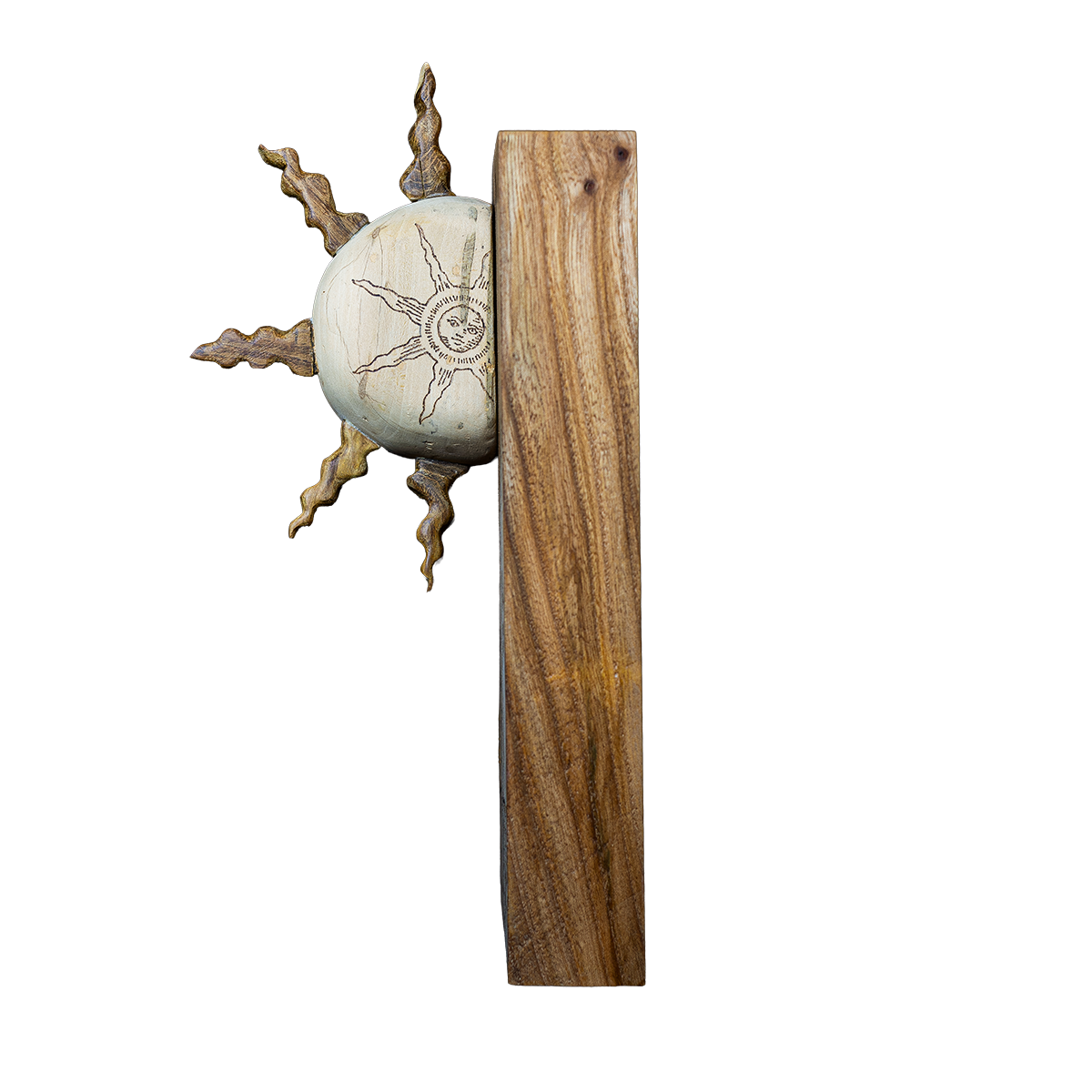
Breaking Through, seen from the back, with the sun burned into the wood using a pyrography pen.
I burned the monk from the engraving into a thick plank of elm, where this time the beautiful, irregular grain of the wood itself became the discovery. Dendroism! As if Flammarion had not this time discovered the world beyond the dome of heaven, but a world that the Industrial Revolution had largely overlooked: the natural world itself.
Jan Bom, 18 november 2026