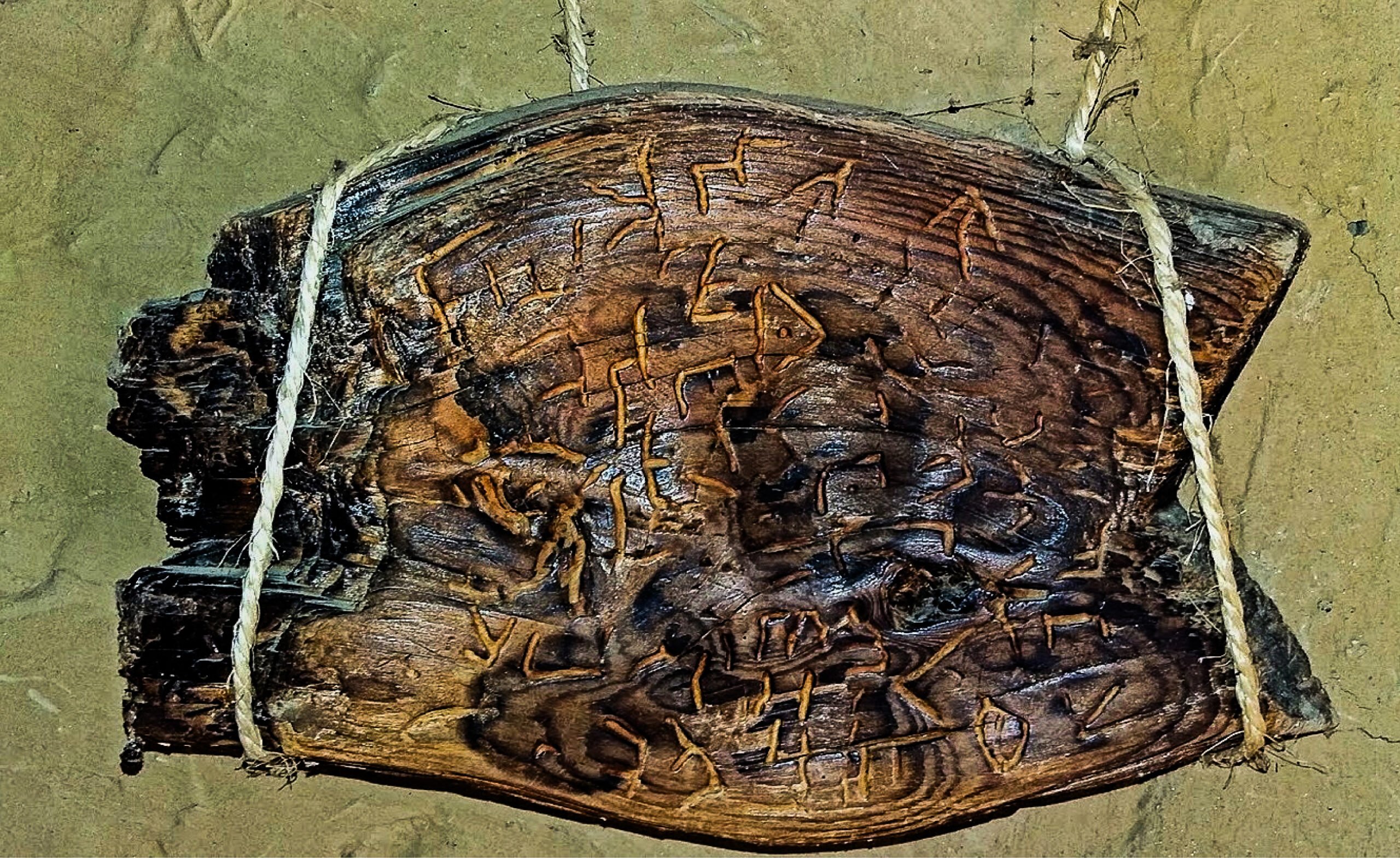
A wooden tablet with signs dated between 5470 and 4850 BC. Is it an example of a very early script, carved out during the late Stone Age? Or is the ‘Dispilio tablet’ a map of an early settlement in the province of Kastoria, high in Greece? The mystery has not yet been solved.
Oldest letter signs of humanity?
The Dispilio tablet would therefore be older than the famous Kish clay tablet from Mesopotamia, which consists of pictograms. This text dates from around 3400-3100 BC and is therefore thousands of years younger.
That the Dispilio tablet has been preserved so well is very special. The not yet deciphered signs are carved out in an organic and perishable material like wood. Natural material decays: if not by rot, then by woodworm. However, this tablet has been able to withstand the centuries because it has been under a layer of clay and water.
The miracle was discovered during a dry period in 1932, when the water level in the lake was lower than normal. Remains of wooden poles revealed traces of the early settlement Dispilio.
In 1935 archaeologist Antonios Keramopoulos conducted a preliminary investigation. However, the excavation was not completed due to the outbreak of World War II.
A systematic excavation project only began decades later, in 1992, under the direction of Georgios Hourmouziadis, professor of prehistoric archaeology at Aristotle University of Thessaloniki. By pumping away water from the lake, archaeologists were able to uncover the remains of this extensive settlement from the late Neolithic (also called the late Stone Age, when hunter-gatherers first became farmers). It turns out to be one of the most important and oldest permanent societies in Europe.
During the excavations thousands of objects were found, including tools made of stone, bones and flint, together with animal bones. The discovery shows that the inhabitants were engaged in hunting and fishing, but were also already keeping livestock. The wooden tablet suddenly floated up in 1993. After washing away the mud, ten rows of signs appeared. After drying the tablet, the incisions largely lost their depth.
Cedar wood under water
The tablet is carved in cedar wood (Cedrus sp.), a conifer whose wood is used outside to this day, among other things for fences. Originally cedars grew at high altitude of one thousand to 1200 meters in the Mediterranean countries. In the Himalayas this tree even grew up to 3,200 meters. It is also certain that the piece of tablet is a cross-section of a trunk. The annual rings are still clearly visible.
The Dispilio tablet is possibly an early form of written word, as similar symbols engraved in clay have been found in the Vinca culture in settlements on the southern Balkans. The clear symbols on the wooden board, some ‘scribes’ think they resemble those of the Old Greek alphabet in an early form, are possibly a first form of written communication.
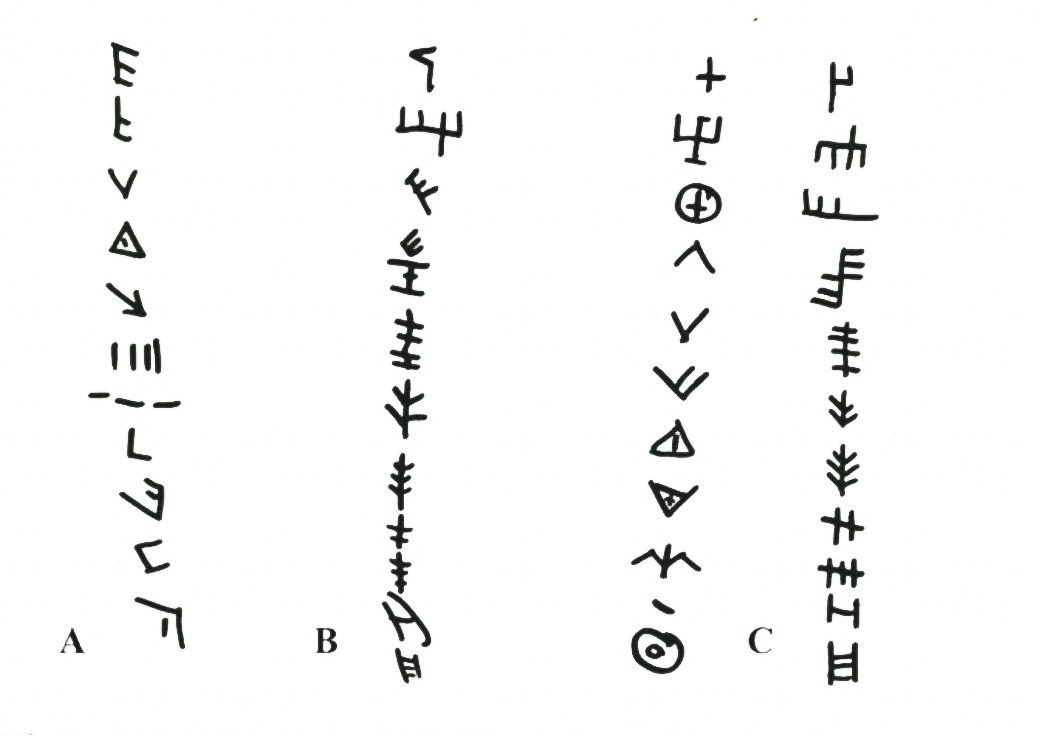
A: the signs found on the Dispilio tablet; B and C: signs found on the first clay tablets.
Not yet deciphered signs
Professor Hourmouziadis suggests that the script, which still needs to be deciphered, could be a variety of communication forms, including symbols for counting possessions.
The age of the wooden tablet was finally established after a carbon-14 investigation at the year 5202 BC.
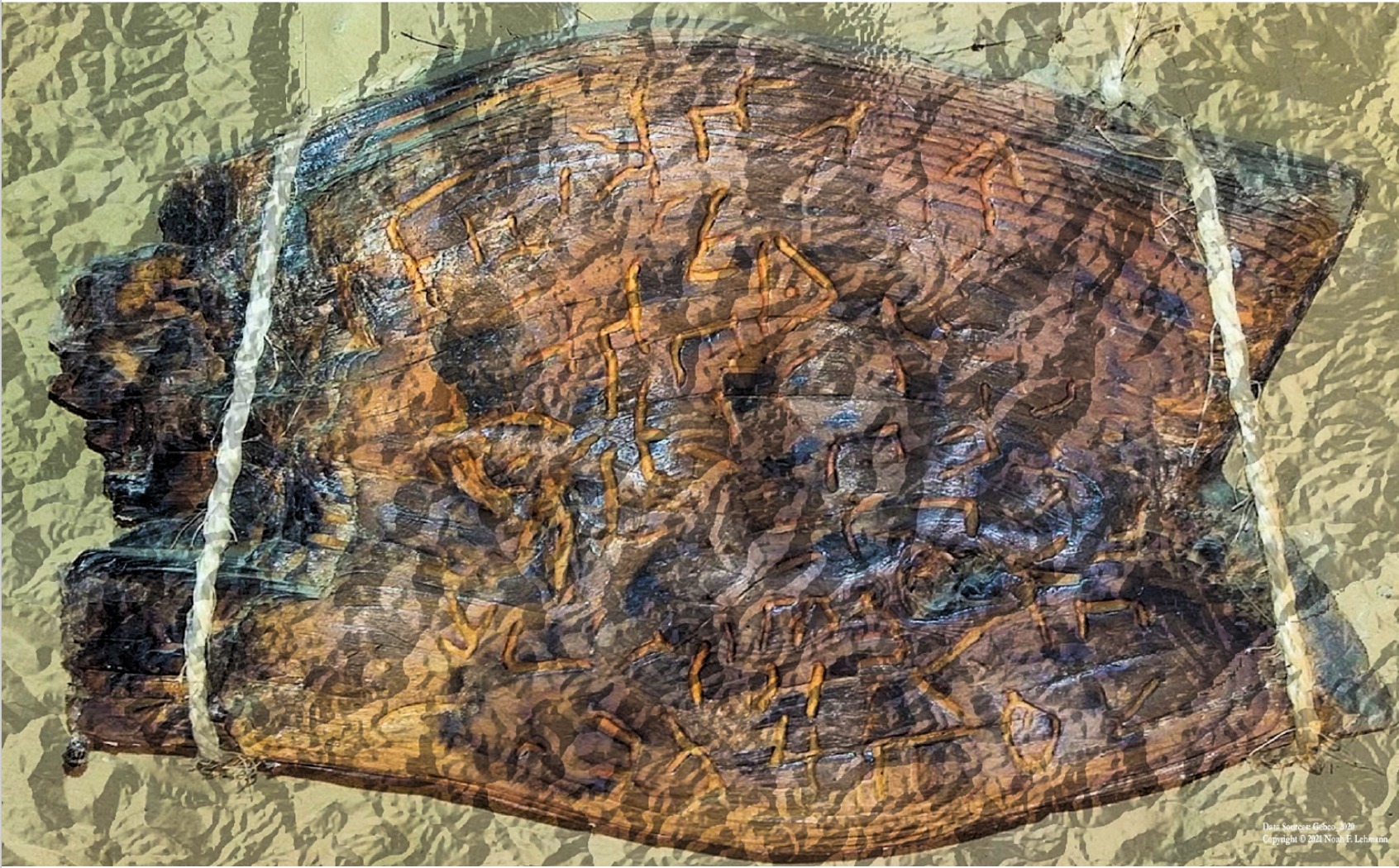
A map of the area projected over the tablet.
Or is it the first map?
However, it is not 100 percent certain whether the signs on the tablet are really an early form of script. The ‘researcher’ Noah F. Lehmann looked at a height map of the terrain around the settlement and discovered remarkable similarities. According to Lehman, the tablet is therefore more of a ‘map’ of the area than an early script. What contradicts this finding is that Professor Hourmouziadis also found similar signs on remains of pottery shards. Or were those decorations? It is unlikely that tableware was also used in prehistory to find the way through the mountains.