First primitive art, then Western art, then tourist souvenir. This is how one of the most popular wooden tourist souvenirs from Bali came full circle; that of the weeping Buddhist monk.
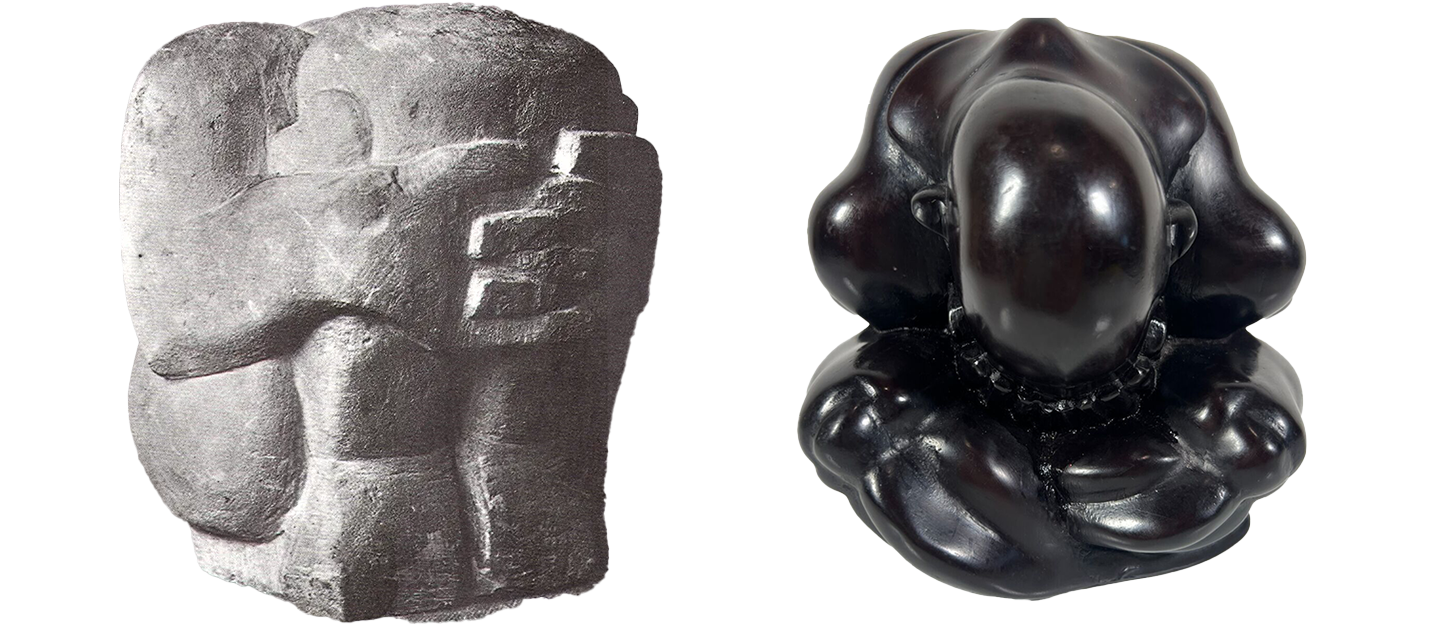
Left the ‘Crouching Figure’ by André Derain, right the wooden ‘Weeping Monk’ from Bali.
Shortly after 1900 great interest arose in ‘ethnic art’ in the international artist colony in Paris. Gauguin led the way, with the sculptures he carved in wood on Tahiti in the tradition of the inhabitants of French Polynesia. African masks in museums and at dealers inspired Picasso to deconstruct the face and the guitar. Cubism was born. Brancusi made a wooden figure closely related to African sculpture — although he himself denied that influence. Yet this influence is also very clearly recognizable in the oak consoles he made for many of his sculptures. His studio was full of them.
First primitive art, then art
But it was the French artist André Derain who made a sculpture that came full circle. He saw the sculptures of Gauguin, but also the ‘originals’ in the Ethnographic Museum in Paris. Folk art from the then French colonies in Indochina and Africa.
They inspired Derain to make his ‘Crouching Figure’ in 1907, carved directly from the limestone of the stairs of his parents’ house in Châtou, France. His crouched man is almost square, as if he must fit in a cube. His feet are blunt, just like those of the God of the Aztecs: Xochipilli (at the time on display in the British Museum). The proportions of the seated figure, however, are again ‘African’.
Art grows from ideas
I cannot prove that this particular figurine served as an example for one of the most popular souvenirs later made by Balinese artists – still for sale at the art market in Ubud as ‘weeping monk’. It is speculation, but the resemblance is striking. Art never arises in a vacuum. It grows from the ideas, experiments and missteps of those who preceded it.
The fact is that the sculpture by Derain, inspired by ‘Tribal Art’, caused a sensation at the beginning of the last century. It is now considered an important sculpture in Western art history, as a marker of the search for a new aesthetic. It can still be seen in Vienna, in museum MuMok.
Then art, then tourist souvenir
It is possible that the Dutchman Rudolf Bonnet and German Walter Spies also saw this sculpture or a picture of it. The two, themselves artists, stimulated the ‘Art Deco’ movement in Bali. They had a tourist shop and a group of local wood carvers who carried out commissions for them. In this way they stimulated Western stylistic influences. Could it be that they gave one of ‘their’ Balinese woodcarvers a picture or a photo of Derain’s work as an example? Who then lowered the head and the hands on the figure’s head slightly, crossed the legs and rounded off and made Derain’s cube shape more Eastern?
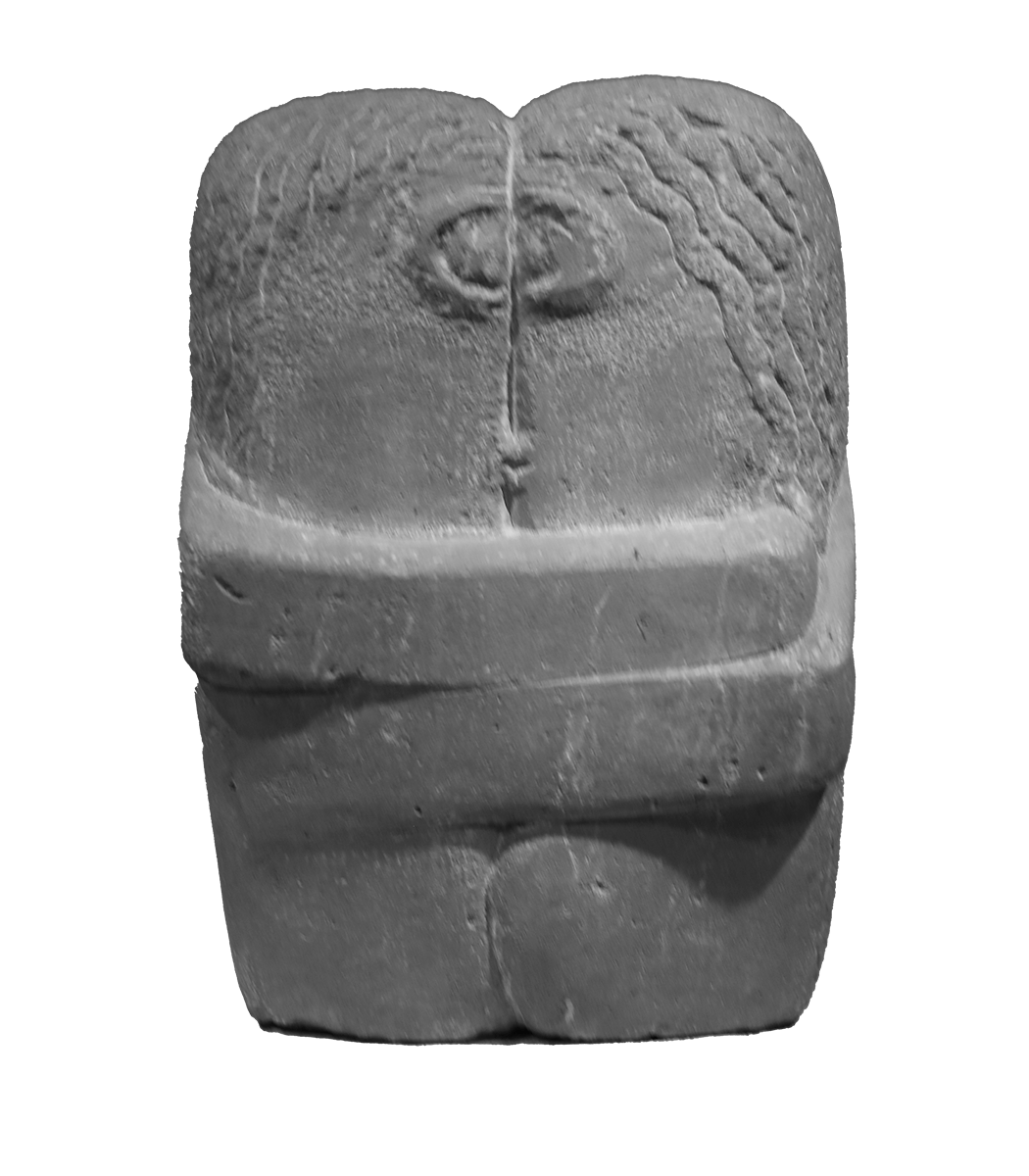
The Kiss by Brancusi now also for sale as a fridge magnet.
If so, the wooden original examples became wood again after an intermediate step in stone. And the origin from ‘primitive art’ had been brought back to the non-Western world. To then shine in hundreds of Dutch living rooms, gleaming in the polish, as a reminder of a beautiful holiday in tropical Indonesia.
But not only the Balinese possibly built on Derain. Brancusi also later made a famous cube-shaped sculpture of two kissing people. And that too is available as a tourist trinket: as a fridge magnet. For sale in the museum shop of T’Hart Museum in Amsterdam. In wooden version.
Jan Bom November 29, 2025