The miniatures carved from wood by Adam Dircksz date from the 16th century and are so small that you need a magnifying glass to study them properly.
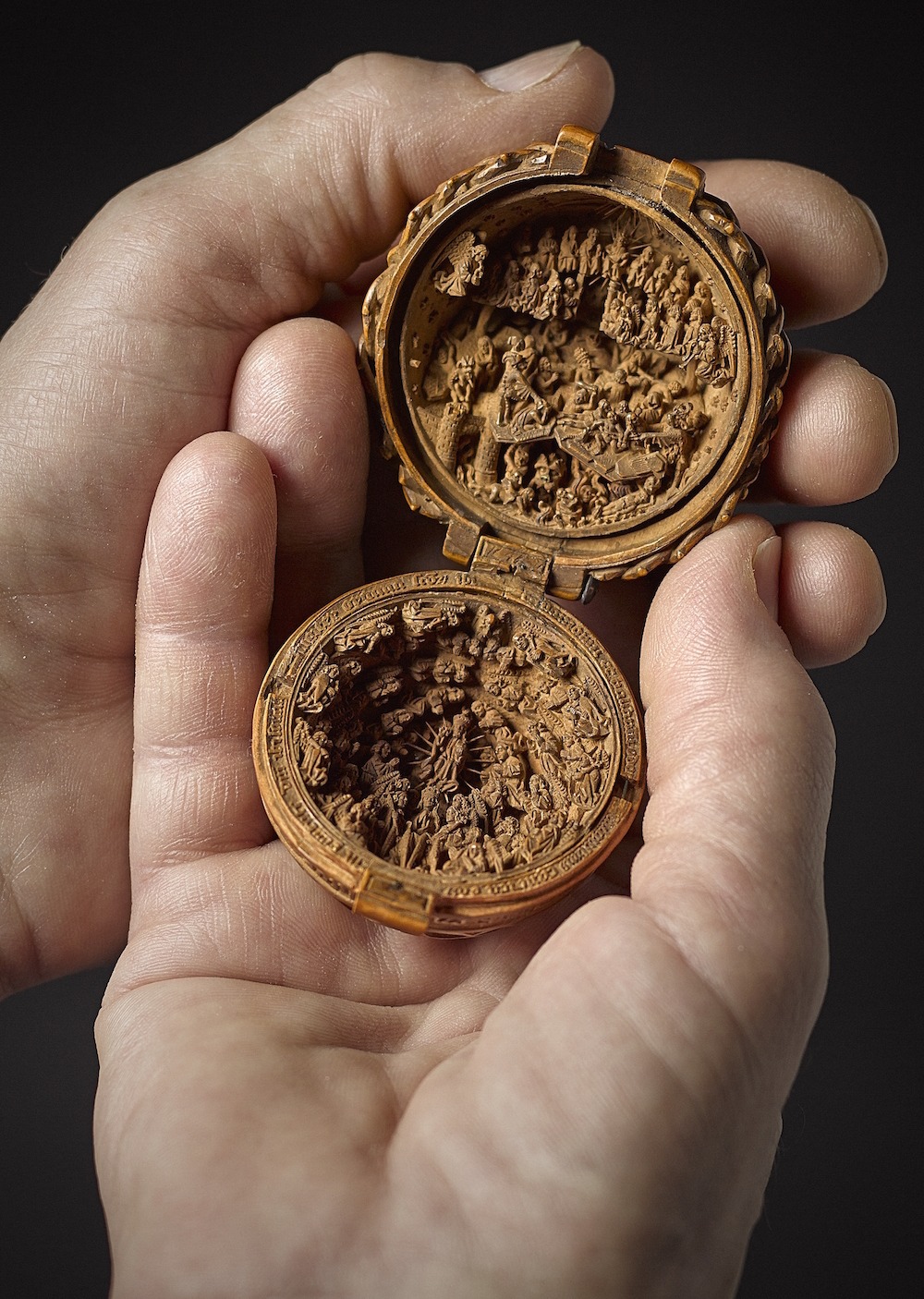
About 135 to 150 of these carved miniatures of boxwood have been preserved. They are owned by various private collections and museums.
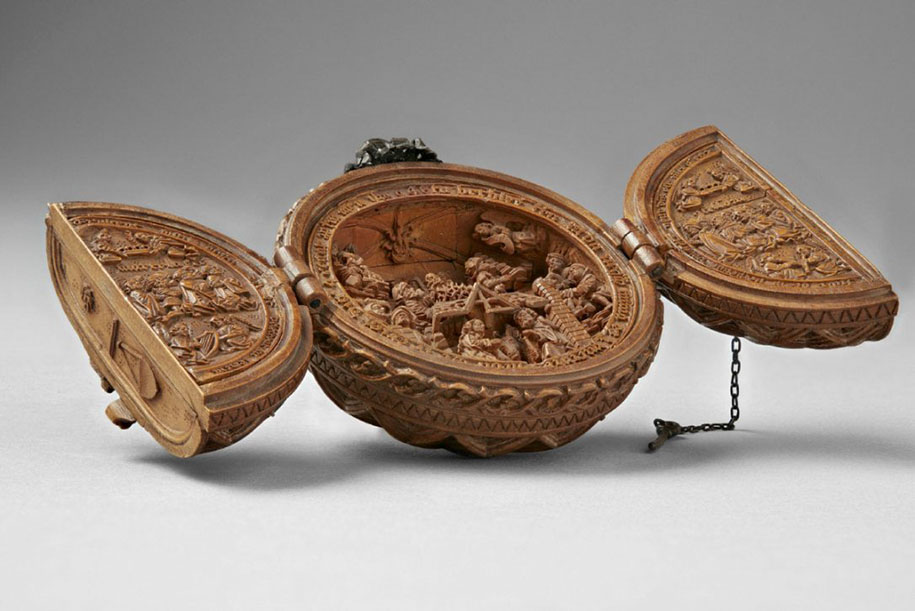
They were portable prayer nuts
Originally they are intended as small portable altars, because the representations depict Biblical stories. Details show a sponge to dab the face of Christ on the cross. Or Pilate washing his hands in innocence after condemning Jesus to death by crucifixion. A closed ‘prayer nut’ is no larger than a golf ball and fits perfectly in an open hand when opened.
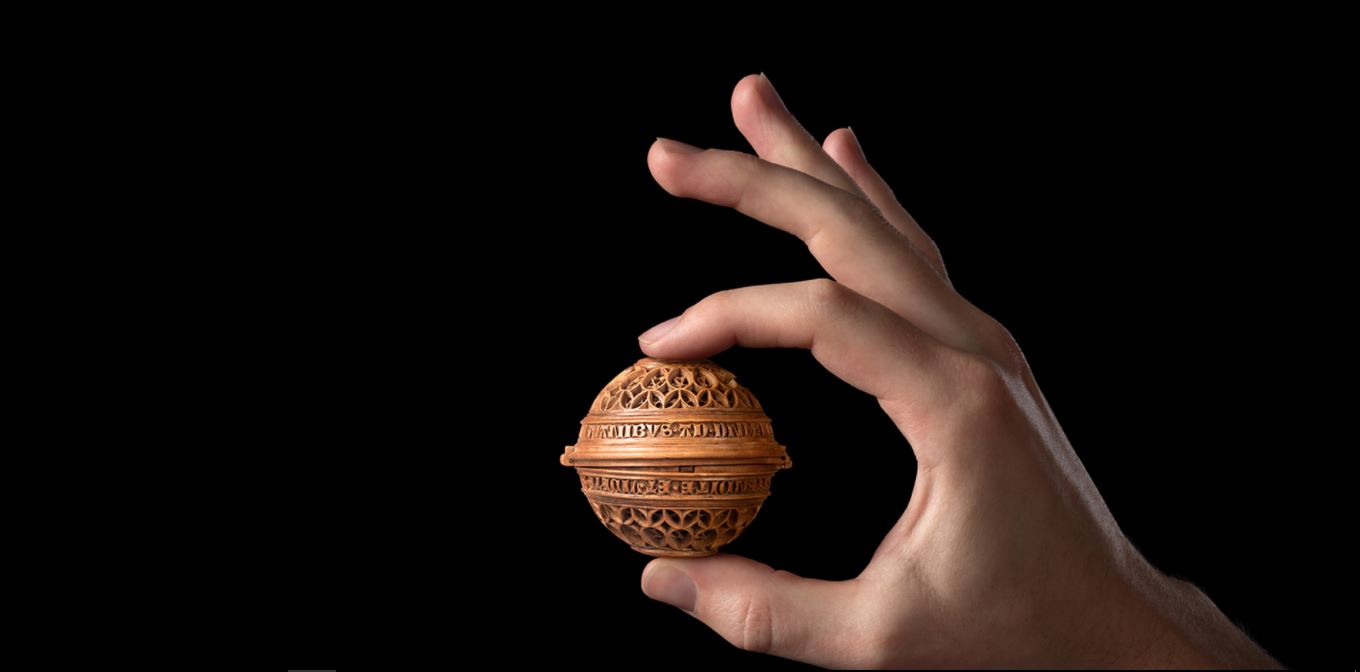
The Rijksmuseum in Amsterdam organized an exhibition ‘Small Wonders’ of this collection in 2017. A team of historians and conservators also discovered after years of research who the maker of these wonders is: it must have been Adam Dircksz. Based on the texts on the side of the boxes, he would have worked in the Southern Netherlands, present-day Belgium. However, other sources suggest that his wood workshop must have been in Delft.
Much research on Dircksz has been done by art historian Jaap Leeuwenberg. In one of the prayer nuts, owned by the Statens Museum in Copenhagen, Dirksz carved his name in Latin on the edge: ‘Adam Theodrici me fecit’ (meaning ‘Adam Dircksz made me’). Other works are owned by the Metropolitan Museum of Art in New York, the Art Gallery in Toronto (Canada) and the Rijksmuseum, among others.
The famous designer Irma Boom made a beautiful book of the exhibition, with the same title ‘Small Wonders’, still – sometimes – available second-hand.
Carved with a dentist’s drill bits?
The artworks were all made within a very short time period, between 1500 and 1530. Researchers used micro-CT scanning and advanced 3D analysis software to examine the wood carvings.
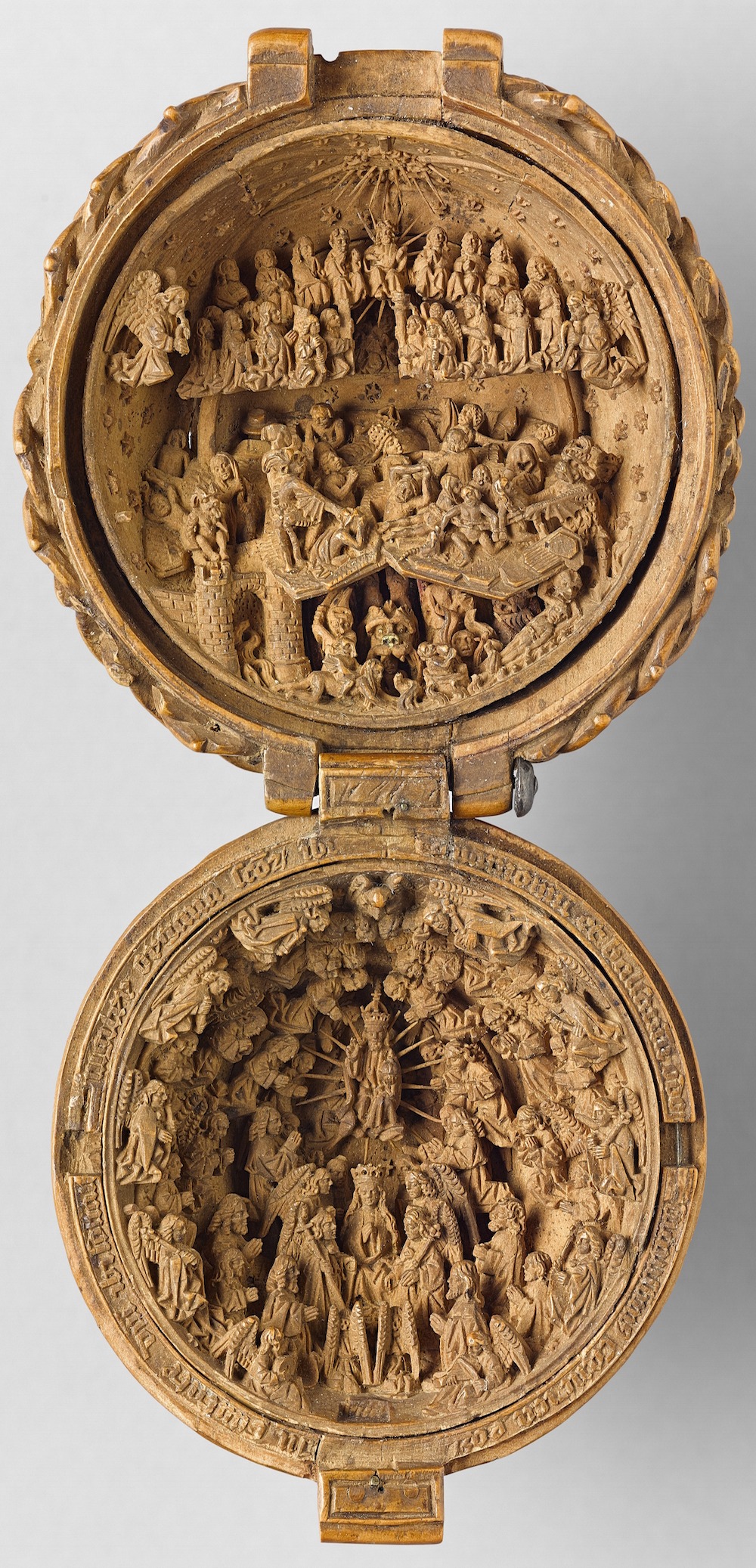
The researchers discovered how advanced the miniature altars were constructed. The inner layers are joined with joints that are so precisely hidden that only a microscope or an X-ray can detect them. Some fragments of the miniatures are attached to each other by small connecting pieces.
Art historians see a relationship with the work of silversmiths from this time. The carving probably used the fine instruments of dentists, such as drill bits.