The African Period of Picasso did not last long, from the summer of 1907 to the autumn of 1908. But the impact on his development was enormous and led to Cubism. A wooden female figure from 1907 could just as well have been carved by an African tribe.
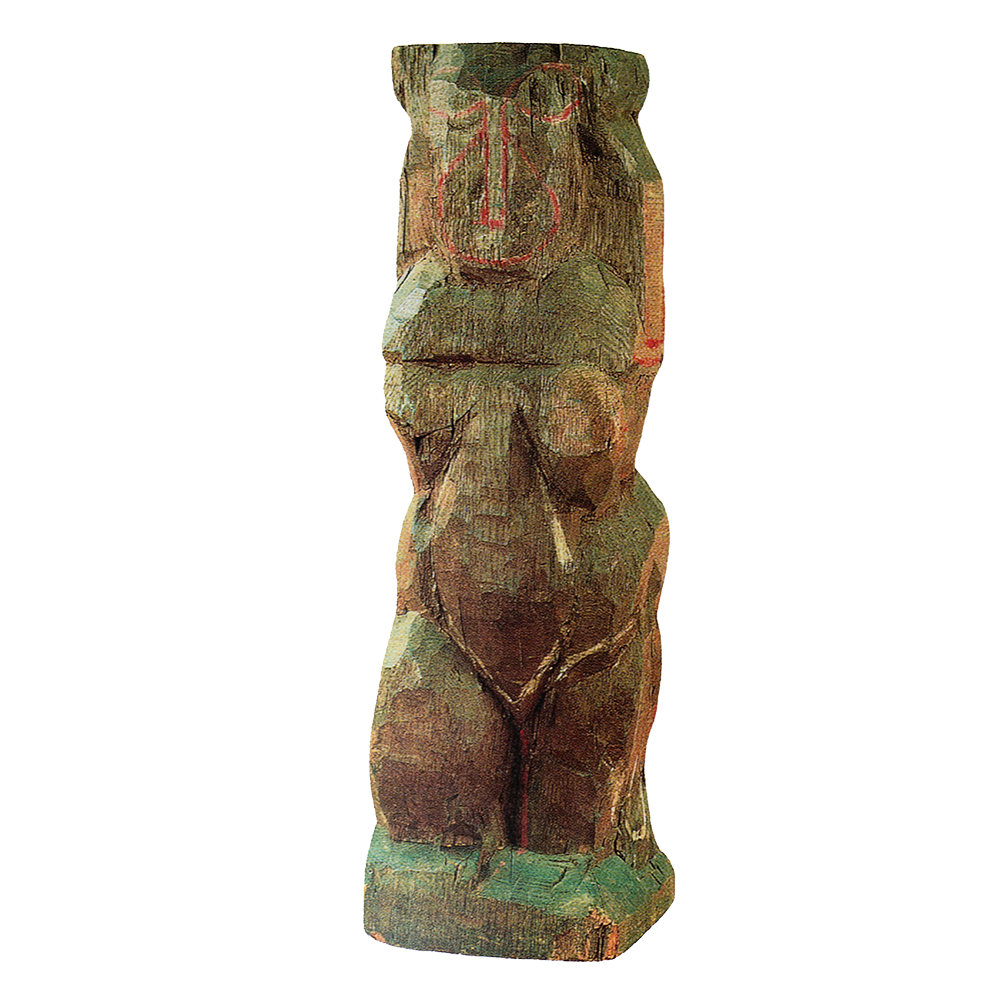
The African Period of Picasso produced, among other things, this wooden sculpture Figure (Caryatid).
Picasso simply called this sketchily painted wooden sculpture ‘Figure (Caryatid)‘. His interest in African masks and sculptures went hand in hand with that for the directly carved wooden sculptures by Gauguin from Tahiti. Those sculptures were also rough and primitive, but not as crude as Picasso’s female figure. The painter Henri Matisse also showed Picasso a wooden figure from Africa. The painter visited, in May or June 1907, the then ethnographic museum in the Palais du Trocadéro in Paris on several occasions.
Art historians do not want to speak of imitation. Rather of influence, of sources of inspiration. In the (no longer available as new) magnificent book Sculpture from publisher Taschen it says: ‘No artist mastered the stylistic characteristics and spirit of Tribal Art better than Picasso. No one could transfer those characteristics into his own sculptures as well as he did. In 1907 he worked as if he were part of an African tribe (page 959).’
Bowl above head omitted
Picasso carved a total of four female figures, the one shown here measuring 81 centimeters in height. According to art historian Reinhold Hohl in Sculpture, they are ‘of monumental power and stature’.
Sketches have also been preserved, showing the women with a bowl on their head, held by raised arms. The rough red-orange outlines of a face on the wood and the rugged traces of an axe show that this sculpture was not completed by Picasso.
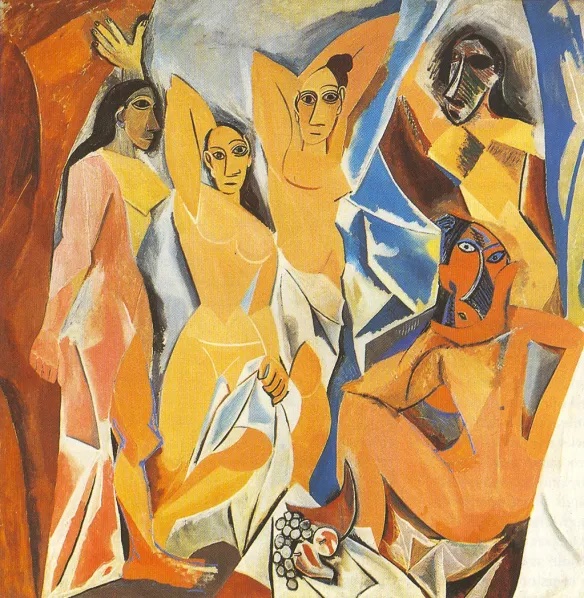
The African Period of Picasso also resulted in a famous painting with African masks.
In art history the paintings from Picasso’s African Period are much better known. This is especially true for his ‘Les Demoiselles d’Avignon‘, which he completed in July 1907, the same year as the wooden sculpture Caryatid. Two, perhaps even three of the women in the painting wear African masks. Female prostitutes from Barcelona had posed as models for this painting. It caused a scandal.
Cubism as sequel
Three years later this African Period got an even more famous sequel. 1910 is recorded as the year in which Picasso definitively presented Cubism as a stylistic feature in his work. With thanks to anonymous African sources of inspiration.
Only much later in his life, in 1956, would Picasso choose wood again: demolition wood to be precise. About this I wrote an earlier article on Wowwood, with a photo of an assemblage that the artist had composed from a small box, a plank, two buttons and wax. That small box also shows African features again.
Jan Bom, January 6, 2026