De Kus (The Kiss) by Jeroen Henneman is a drawing in space several meters high. Standing beside the sculpture, it appears to be nothing more than two thin strips of stainless steel. Walk to the front, however, and the strips suddenly become two people kissing. Henneman also created the sculpture as a wooden model.
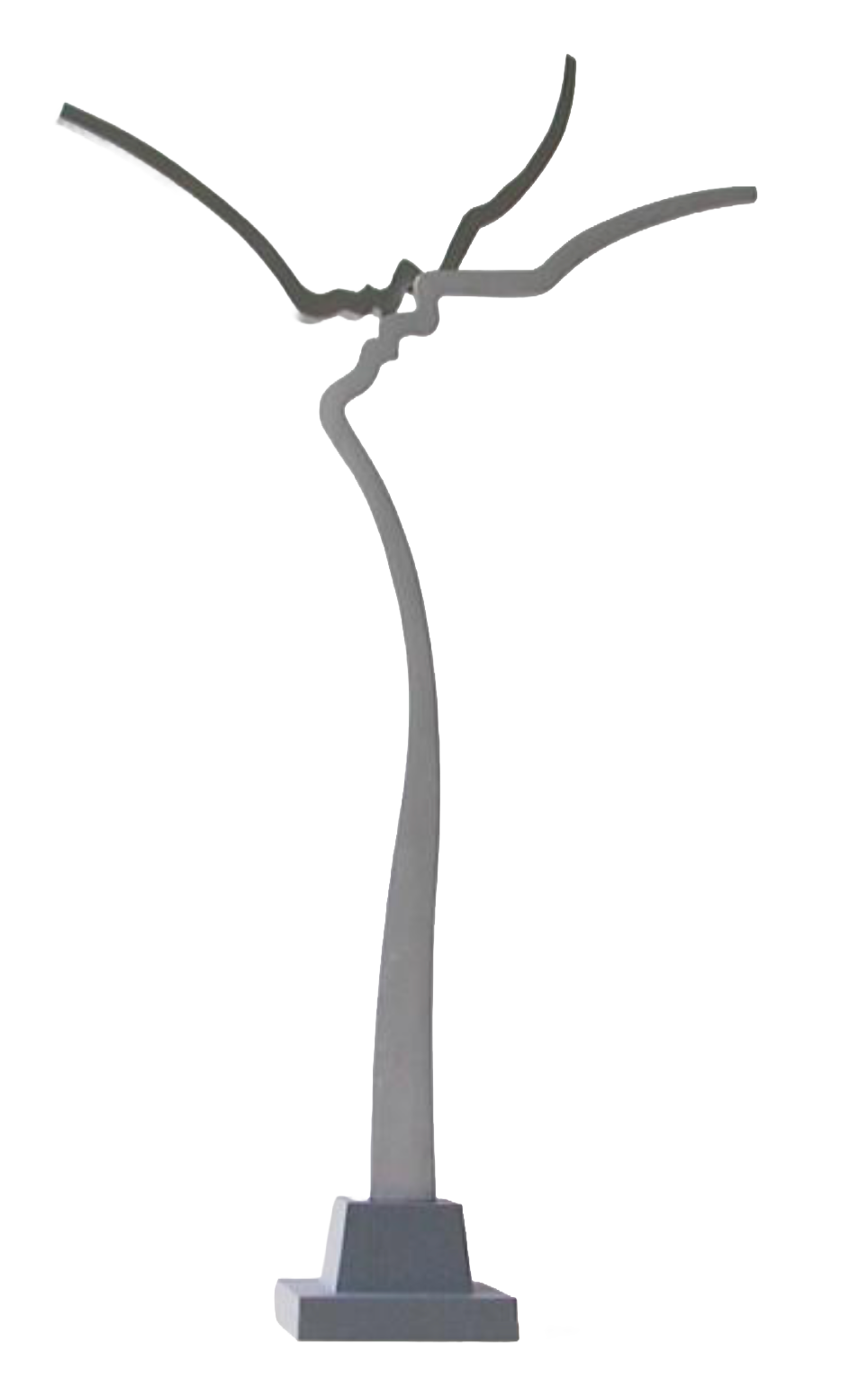
De Kus by Jeroen Henneman, as a model in painted wood.
It is precisely this moment of discovery that makes the work so remarkable. Henneman did not want to create a sentimental monument to love, but a sculpture that literally comes into existence in the eye of the viewer.
In 1982, the first large version of De Kus was installed near the former headquarters of De Bijenkorf in Amsterdam-Zuidoost. The sculpture now stands at Anton de Komplein — still in this Amsterdam- district.
A second, changed version of De Kus was placed at the Stationsplein in Apeldoorn. This seventeen-meter-high work was presented as a wedding gift from the city to the then Prince Willem-Alexander and Máxima Zorreguieta. The sculpture subtly refers to the kiss on the balcony of Royal Palace of Amsterdam during their wedding ceremony.
A Spatial Drawing
Jeroen Henneman (1942) belongs to the most unconventional Dutch artists of his generation. As a painter, draughtsman, printmaker, and sculptor, he developed a visual language that is at once light, philosophical, and immediately recognizable. Abstract and figurative at the same time.
His work often revolves around a surprising shift in perspective: ordinary objects suddenly acquire a poetic or alienating meaning. I once saw a framed black-and-white photograph of a fist causing a wooden bench to sag in the middle, as if it were an IKEA Billy bookcase.
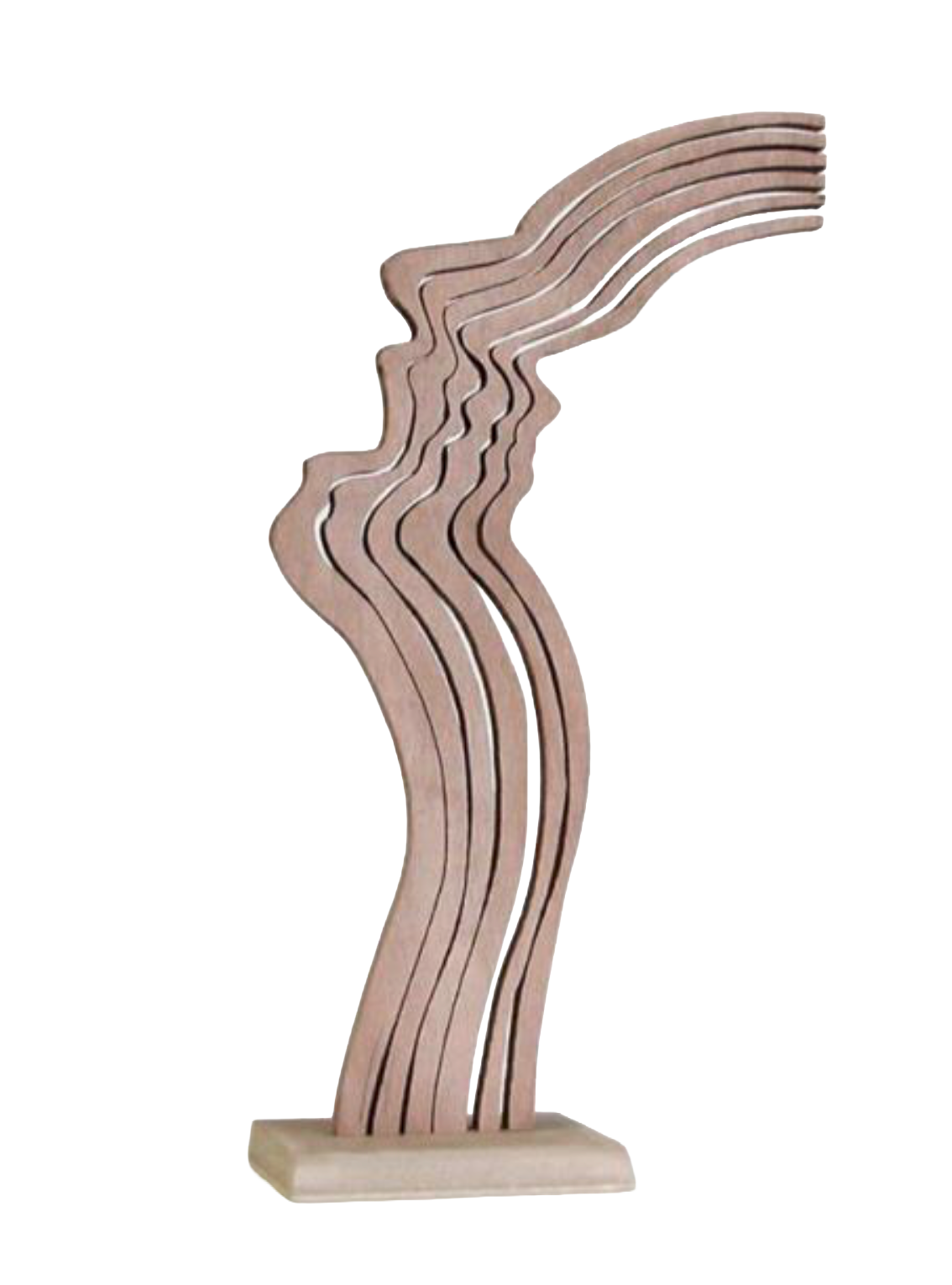
Another wooden model of a large statue, called De Schreeuw (The Scream).
Henneman was born in Haarlem in 1942 and studied at the Institute for Applied Arts in Amsterdam. In the years that followed, he travelled through Europe and the United States. These journeys brought him into contact with a wide range of artistic movements, from Surrealism to Dadaism. The influence of artists such as René Magritte can be felt in his work — not stylistically, but in the way ordinary things no longer seem to be what they are. Henneman began as a draughtsman and painter, but eventually wanted his drawings to literally step into space.
“Standing Drawings”
That idea led to his famous “standing drawings”: sculptures made of little more than lines. The focus is not on mass or volume, but on their suggestion. The air between the lines is just as much a part of the artwork as the steel itself.
Henneman explained this in an online interview with Koos de Wilt:
“I had always been searching for the symbiosis between drawing and object. It started with De Kus, which came into being while I was working with a soldering iron and silver wire. While playing around, something emerged that resembled a kiss. I saw it as a spatial drawing.”
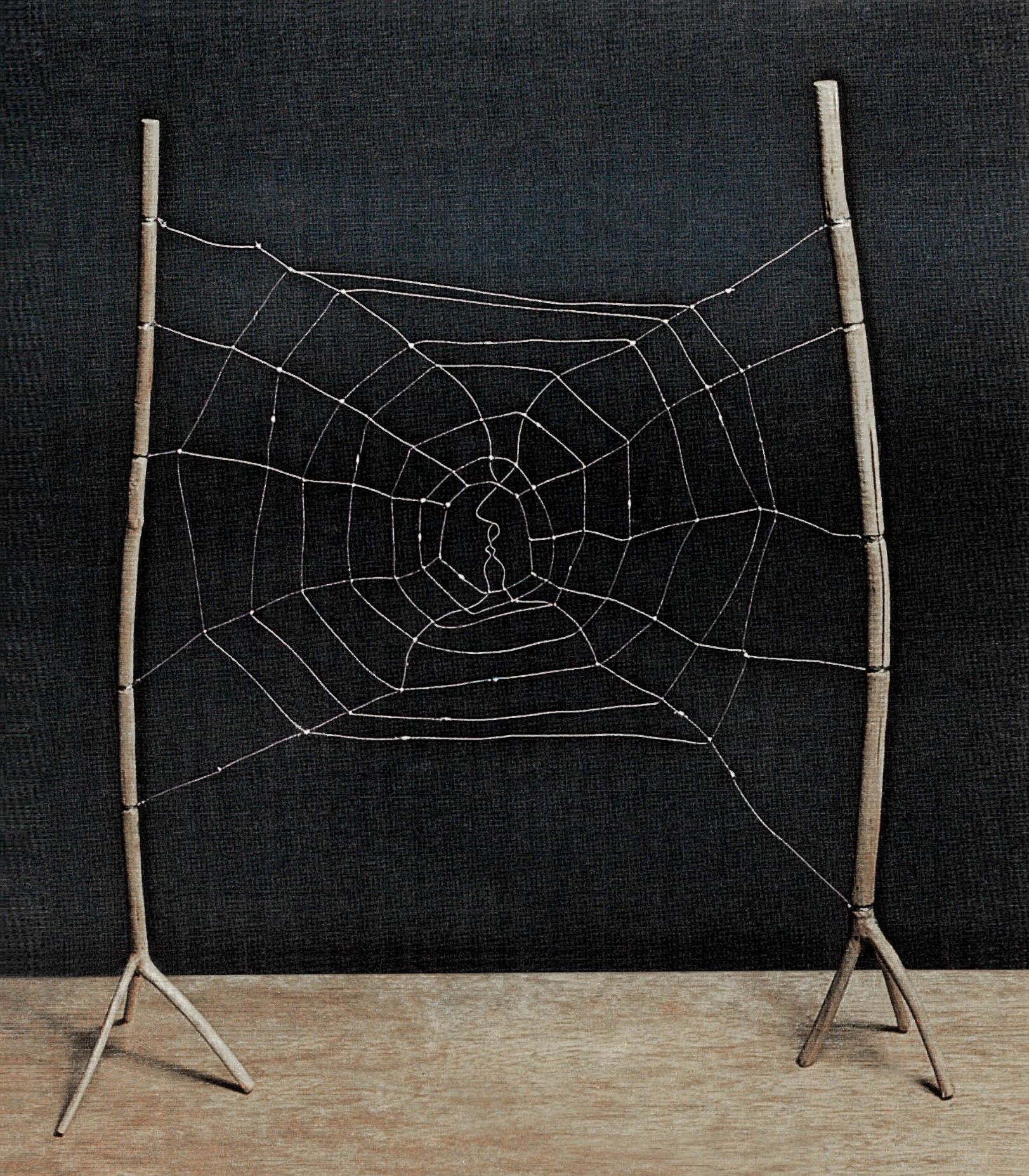
The basic idea for De Kus originated from this sculpture from 1975, made of silver wire.
Although I consider De Kus to be Henneman’s most poetic work, he became known to a much wider audience in 2006 with De Schreeuw (The Scream). He created this monument in memory of the murdered Dutch writer and filmmaker Theo van Gogh. The sculpture begins with Van Gogh’s profile, but after seven layers it transforms into a raw scream. Both De Kus and De Schreeuw use a simple line to make human emotion visible.
Wood as an Intermediate Step
Between the drawing and the final sculpture, Henneman inserts an intermediate phase. He cuts the design on a small scale out of wood, as he did with De Schreeuw. This 50-centimeter-high model can be seen on his website. Not only is it unsuitable for public space because of its size, but wood itself is also unsuited to long-term outdoor exposure. It would quickly turn grey and eventually begin to rot and decay.
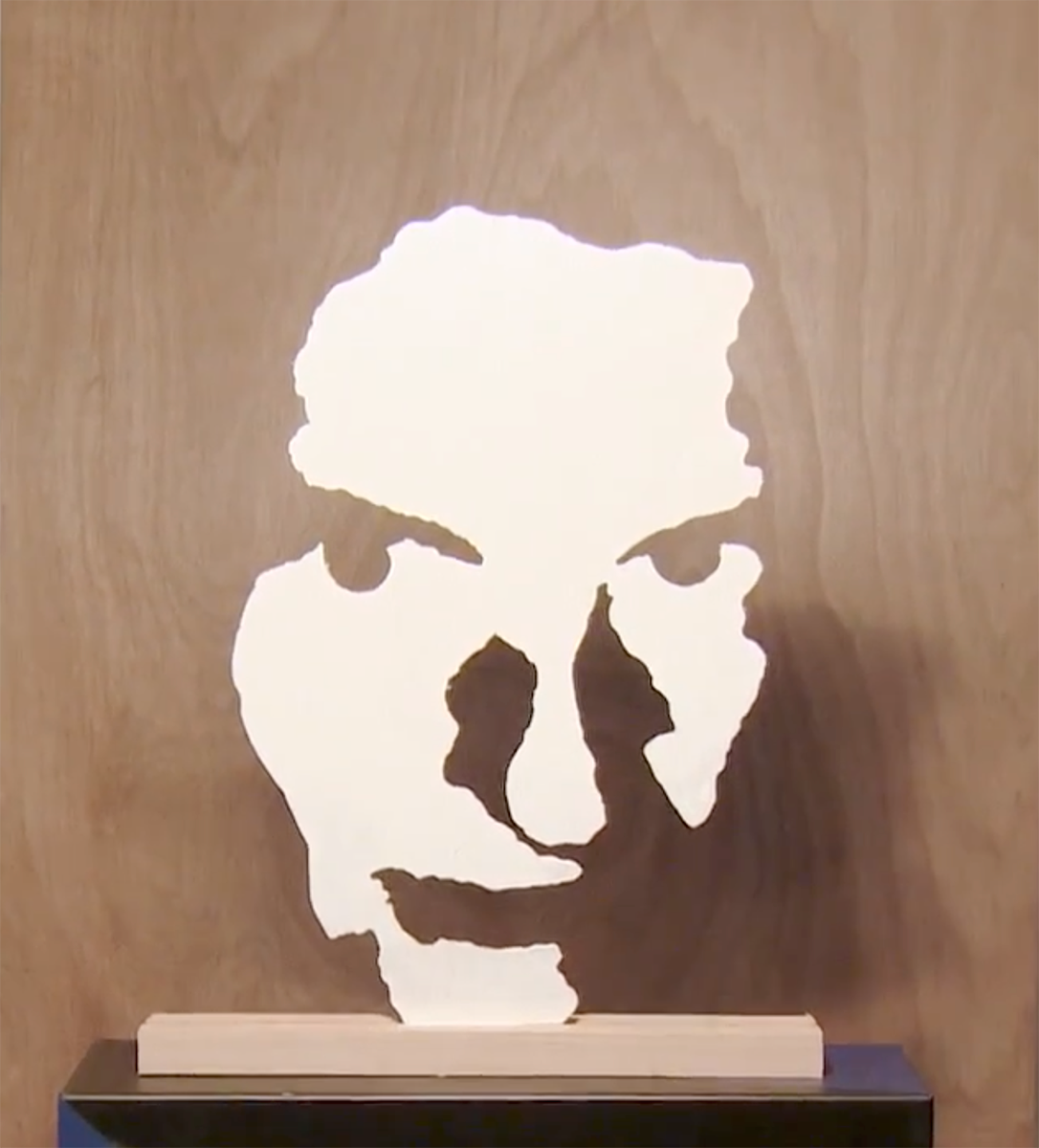
A portrait, made by Henneman by using a scroll saw machine.
Henneman uses wood not only for creating models, but also for making small sculptures. The website of the design store Wonderwood.nl offers several for sale, including the ‘Apeldoorn-variation‘ on De Kus. This unique silver-painted sculpture, made in 2024, is 58 centimeters high. Another wooden work available through the same website is I meet You, featuring plain wooden clogs by another important Dutch artist, Mark Brusse.
Henneman also reveals something of his working method with wood in a short documentary from the series Hollandse Meesters. At 11 minutes and 50 seconds, I see a scroll saw machine with which he cuts out an irregular shape, later painting it white. Only upon very close inspection does it reveal itself as a portrait.
Intimacy in Steel
De Kus is about perception and imagination. The moment the viewer discovers the two faces, steel suddenly turns into intimacy. This ability to evoke a deeply human experience with minimal means is what makes Jeroen Henneman, for me as well, one of the most extraordinary artists in the Netherlands.
Jan Bom, 18 May 2026