Which famous artists discovered their artistic language in wood? There are surprisingly many. This is clear from dozens of artist biographies written over the past few years for the website Wowwood.nl. It is a discovery that runs counter to the way wood carving has been undervalued.
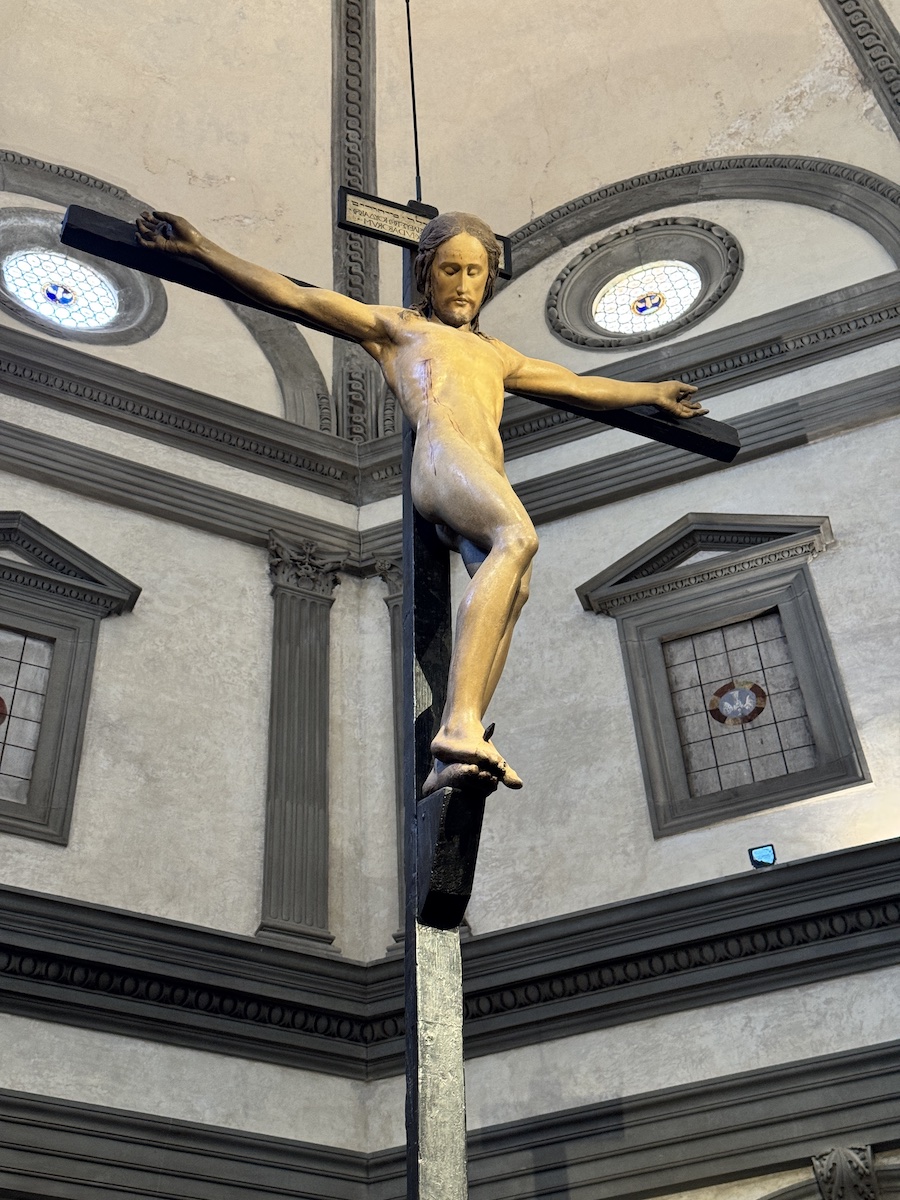
Michelangelo was only 18 years old when he carved this naked Jesus out of lime wood.
When we think of Michelangelo thinks about marble. Seeing Henry Moore, we see enormous bronze monuments. Antony Gormley brings to mind cast iron and steel. And Karel Appel? Everyone immediately thinks of paint and paintings. Naturally.
But there is a remarkable connection between these artists, a combination of facts that has never been made before.
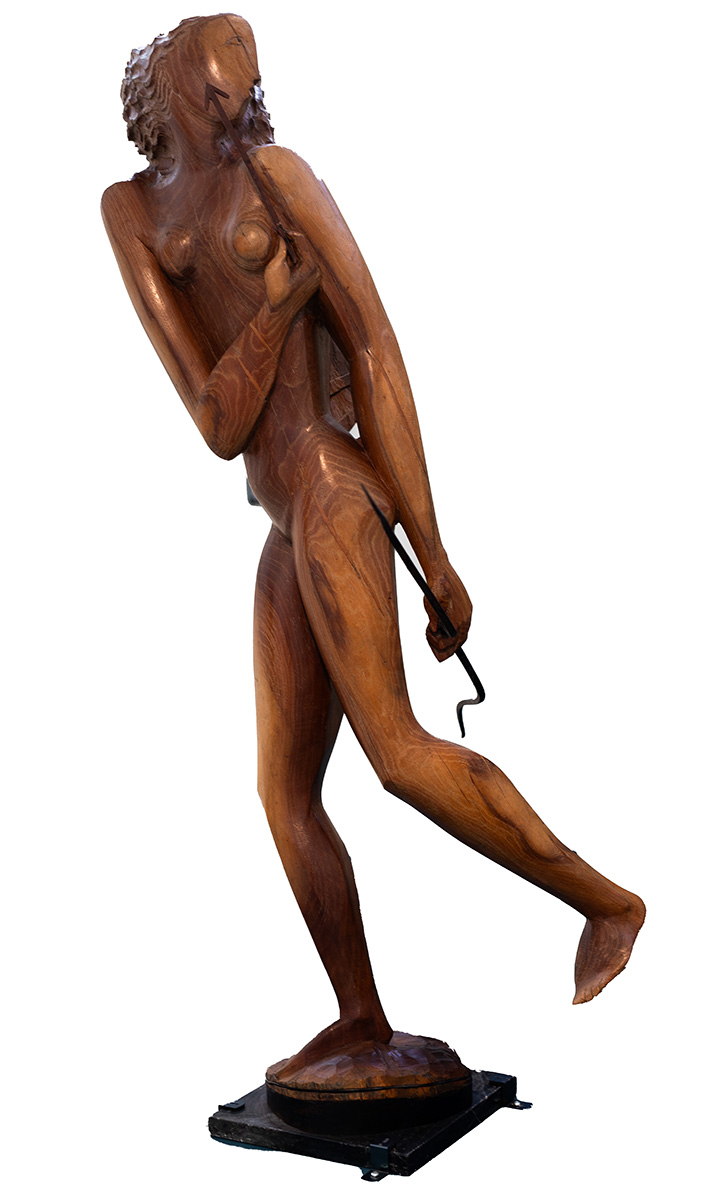
Diana, one of the many wooden sculpting made by Ossip Zadkine.
All four developed their artistic language in wood. And they are far from alone. Ossip Zadkine (1888–1967) did so too. In the Netherlands. He is best known for his bronze war memorial The Destroyed City in Rotterdam. But in Paris, Zadkine carved more than a hundred wooden sculptures before turning to other materials.
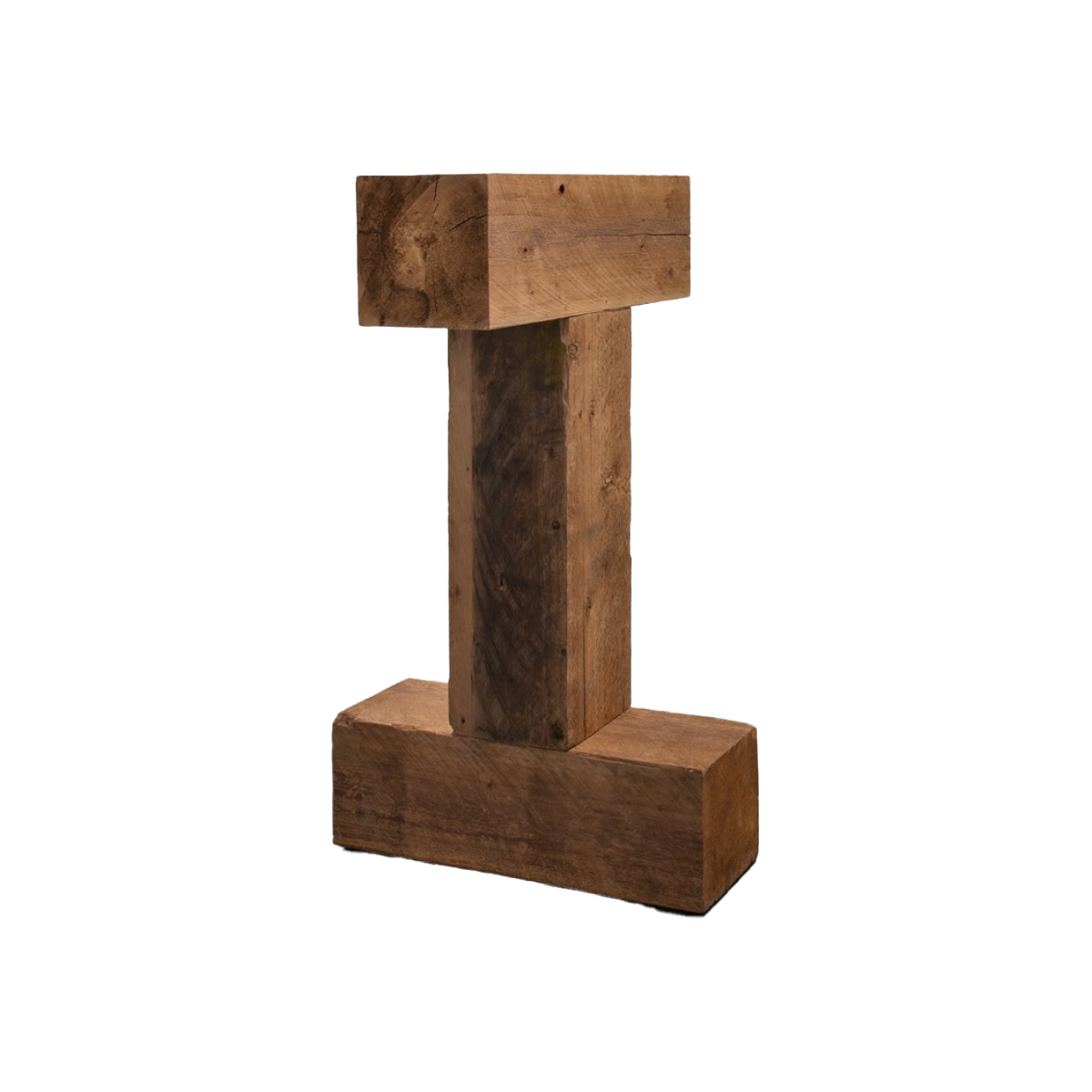
Carl Andre, two large logs, no more, no less: the start of minimalism.
The same applies to the American minimalist Carl Andre (1935–2024). He first stacked railway-sleeper-like blocks of wood before going on to lay stone floors in galleries. And then there is Paul Gauguin (1848–1903), who, during his early years as an artist in Brittany, carved sculptures and even made his own wooden clogs. This was long before he picked up his tools again in French Polynesia to carve primitive-looking busts and reliefs.
This is no coincidence
And this is no coincidence. Comparing the lives of numerous famous artists reveals a remarkably consistent pattern. Wood was not simply a material with which they experimented at the beginning of their careers. It was the material in which they learned to look, feel and shape. Their later work still bears the traces of that experience.
One of the earliest masterpieces by the still only eighteen-year-old Michelangelo Buonarroti (1475–1564) was a crucifix carved from limewood. Art experts praise the perfection of the young artist’s anatomy in this Christ, which hangs in the Basilica of Santo Spirito in Florence. Michelangelo had his models, so to speak, right next to his bedroom: he studied the sick in the hospital ward, as well as corpses waiting for burial in the basilica.

Centuries later, Henry Moore (1898–1986) developed his ideas about abstract forms in Britain while carving elm. He needed the hollows to prevent the wet wood from splitting as it dried. His contemporary Barbara Hepworth (1903–1975), meanwhile, discovered how she could translate the organic forms of stones she found along the British coast into wood.
The list is much longer. In Paris, Constantin Brâncuși (1876–1957) carved the original version of his famous Endless Column in oak.
Even Karel Appel
In the Netherlands, Karel Appel (1921–2006) assembled his first sculptures, such as The Windmill, from scrap wood. Poverty played a part too: immediately after the Second World War, he even dismantled parts of his attic room in Amsterdam. Appel then painted the construction in the vivid, unmixed colours that would make him world-famous. The Stedelijk Museum in Amsterdam is fond of displaying the sculpture when presenting its post-war collection.
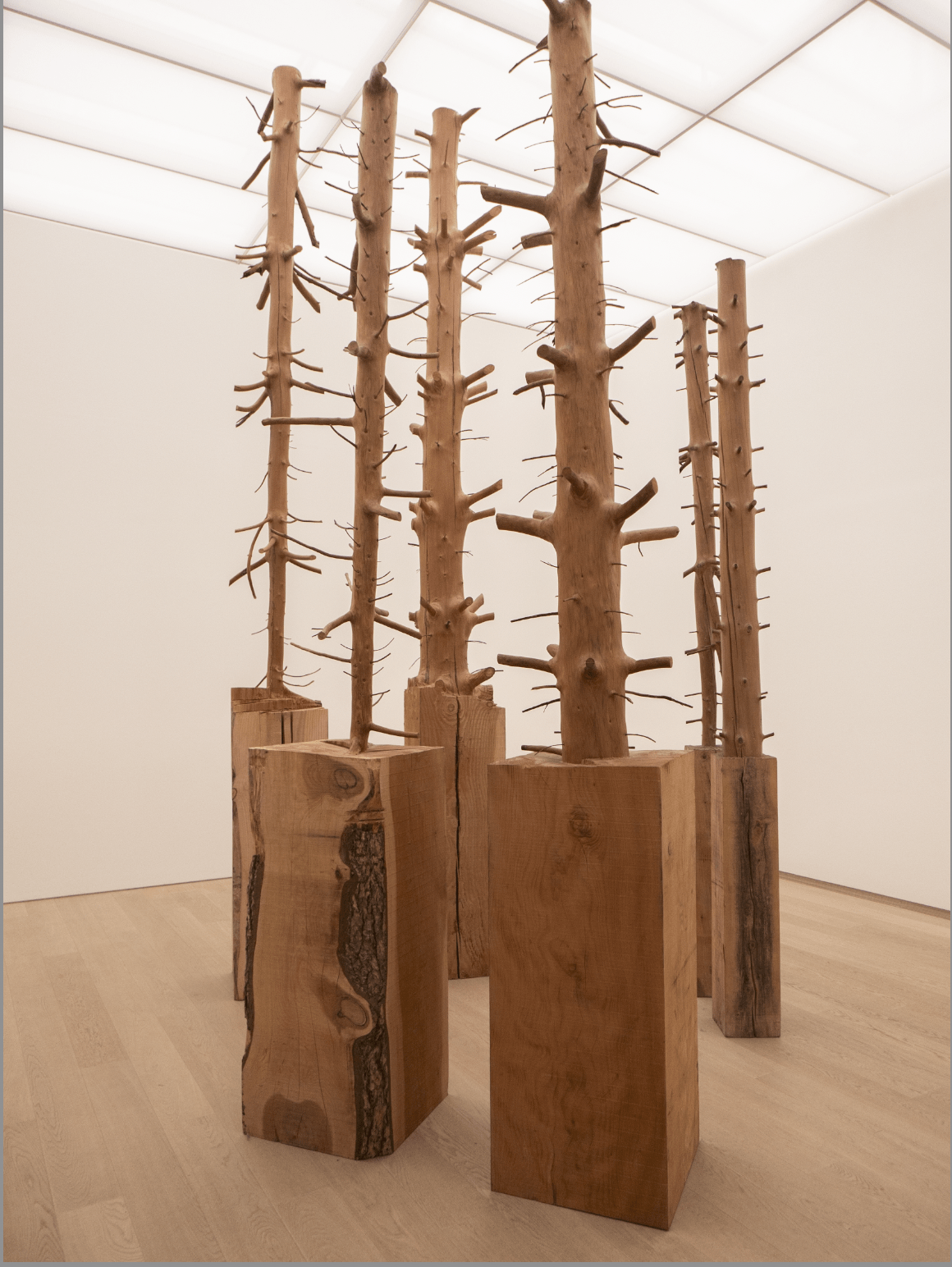
Giuseppe Penonen always worked in wood, but also casted complete trees in bronze.
And what about Giuseppe Penone (1947), the youngest member of the Arte Povera group in Italy? He still regards wood as a “living memory”. In his earliest works, Penone brought “the youngest version of the tree” back to life by hollowing out a thick tree trunk, leaving only the innermost annual rings. Inside that hollow trunk, large enough for him to crawl into, a thin, slender young tree appeared to be hidden. Later, he even cast entire trees in bronze, displaying them upside down in squares and parks.
Antony Gormley (1950), also in England, worked exclusively with tree trunks at the beginning of his career, dissecting the annual rings in an almost scientific manner.
How did Picasso came up with cubism?
Even Pablo Picasso (1881–1973) discovered a new way of seeing through wood carving, although this was not at the beginning of his turbulent career. During his “African period”, the Spaniard was inspired by African masks and sculptures, examples that he himself also roughly carved in wood. Not long afterwards came his first Cubist works, in which three-dimensional forms were presented on a flat surface, painted in many shades of brown. Those paintings still felt distinctly African. In Les Demoiselles d’Avignon, African masks can even clearly be recognised — masks that, of course, had been carved from wood.
Why wood?
The answer probably lies in the material’s unique properties. Wood was once alive. Every grain tells the story of decades or even centuries of growth, drought, and the stresses caused by attacks from insects and animals. No two types of wood are the same, either in strength or structure. A sculptor therefore does not work against the material, but with it.
That requires a different attitude from working in clay, where every shape is possible. Wood demands attention, patience and thought. One wrong stroke of the gouge cannot be undone. A nose chopped off in haste is gone forever. Gluing it back on is a poor and ugly solution. Unlike clay, wood cannot simply be corrected. It was precisely this resistance that forced artists to develop their formal language with precision.
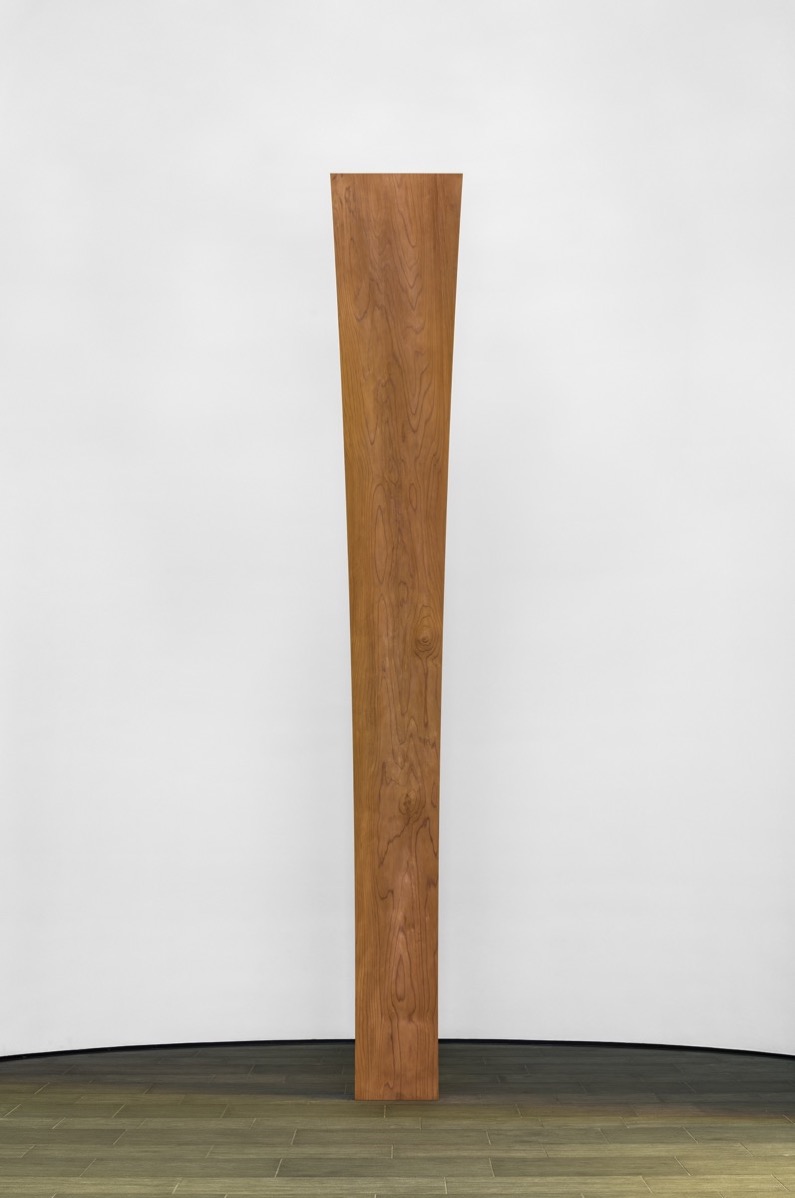
Ellsworth Kelly saw Chinese landscape paintings in the sapele wood of one of his Totems.
At the same time, the natural structure of wood offers unexpected possibilities. This is an idea developed on the website Wowwood.nl under the term Dendroism: the idea that the structure of wood itself can carry a story.
More and more artists are discovering an extra dimension in these patterns and knots. This was true even of one of the most abstract artists who ever lived: Ellsworth Kelly (1923–2015). In the sapele wood of one of his wooden totems, he saw Chinese landscape paintings: rivers, mountains and valleys.
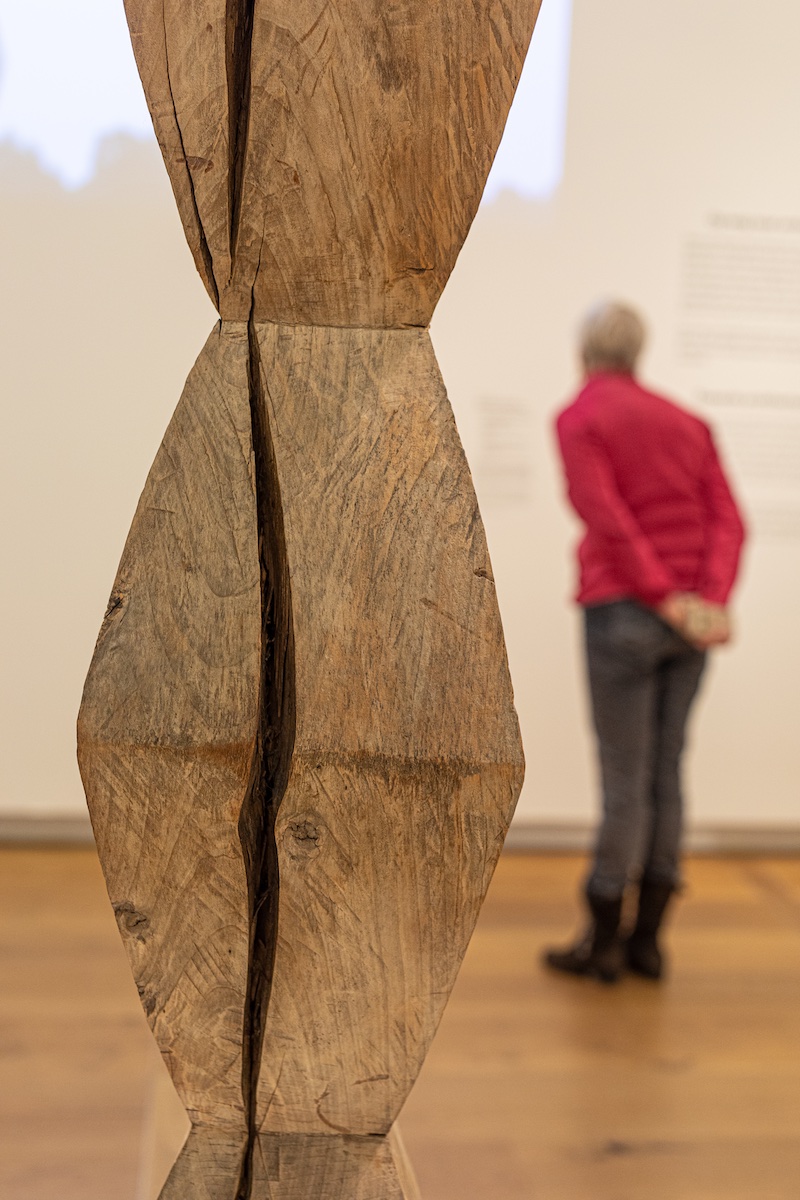
A detail of the Endless Column of Brancusi, which originated in oak.
Remarkably, many artists had left wood behind by the time they became famous. Not because they had outgrown it, but because they had translated the discoveries they had made in wood into other materials. Yet Moore’s organic tension remained visible in his bronze sculptures. The vertical rhythm of Brâncuși’s Endless Column remained the same, even in the nearly thirty-metre-high cast-iron version that reaches towards the sky in his native Romania.
Their first love
Their first love remained recognisable in their later work. But remarkably, it never received the place in their oeuvres that it deserved. Which is very strange. How can an art historian or curator create a complete picture of an artist without analysing and acknowledging the earliest material sources of their inspiration?
Wood is often dismissed as a material that is too traditional or too craft-oriented. That is why it is looked down upon. After all, wasn’t the heyday of wood carving centuries ago, in the medieval workshops of anonymous Masters? And then there is another prejudice: aren’t today’s wood carvers mostly retired men and women tinkering away at a piece of tree trunk in their sheds, boring their audiences with yet another owl?
Persistent prejudices
These prejudices are persistent. The series of biographies on Wowwood.nl shows that the opposite is true. Wood has repeatedly been the starting point for artistic innovation. That was already the case when Michelangelo moved on to marble, carving his brilliantly rendered muscles once again in his David. And it remains true for a living artist such as Gormley, known in the Netherlands mainly for his enormous “pooping man” beside the harbour of Lelystad.
This makes a simple question surprisingly relevant today. Which famous artists discovered their artistic language in wood?
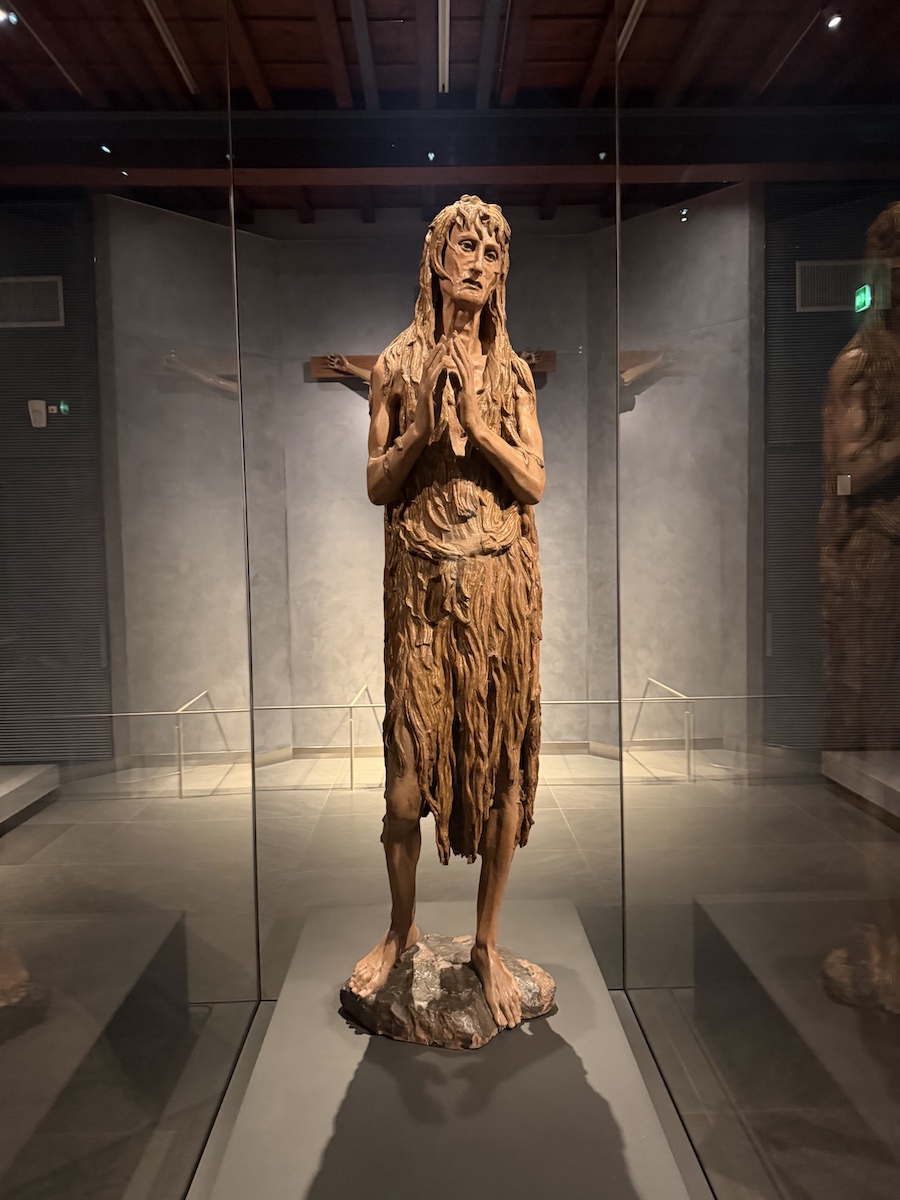
The Maria Magdalena by Donatello was certainly not the end of the history of woodcarving.
If so many great artists found their artistic voice in wood, why does wood carving still receive so little attention in art history? An American “art bible” such as Janson’s already stops discussing carving in its latest edition around the year 1440, with Donatello’s (1386–1466) wooden Mary Magdalene. A masterpiece, certainly — but hardly the last important work ever carved from wood.
Even when the contemporary American wood artist Martin Puryear (1941) is mentioned, Janson’s neither shows nor discusses his masterful wooden Ladder for Booker T. Washington, a monument to the emancipation of Black Americans.
There is a blind spot in formal art history. While museums are rightly adding new stories about women artists and non-Western art, another story remains almost completely overlooked: the story of the material itself. The tree as the artist’s first teacher.
The tree als learning master
There is certainly an urgency to reconsider the subject, including from a social perspective. The world is groaning under the consequences of global warming and continuing climate disasters: forest fires, severe tropical storms, floods and rising sea levels. Trees are part of the solution, as the planet’s greatest “CO₂ eaters”. As they grow, they also store this greenhouse gas in their wood.

The American artist Martin Puryear used wood as a material for his monument for fellow black Americans.
Artists are translating this renewed appreciation of nature into their work. In recent years, galleries have increasingly displayed sculptures by artists who do not alter branches or tree trunks at all. At most, they arrange them into a pattern, as the land artist Richard Long (1945) did with his wooden circles. He did not need to alter the shape of the tree trunks: nature itself is the perfect designer.
It is therefore time to retell the last six hundred years of the history of sculpture, from the beginning of the Renaissance to the present day. Not from the perspective of bronze, marble, plastics or concept, but from the material in which so many artists found their artistic language: the wood of trees.
Jan Bom, 24 August 2026